



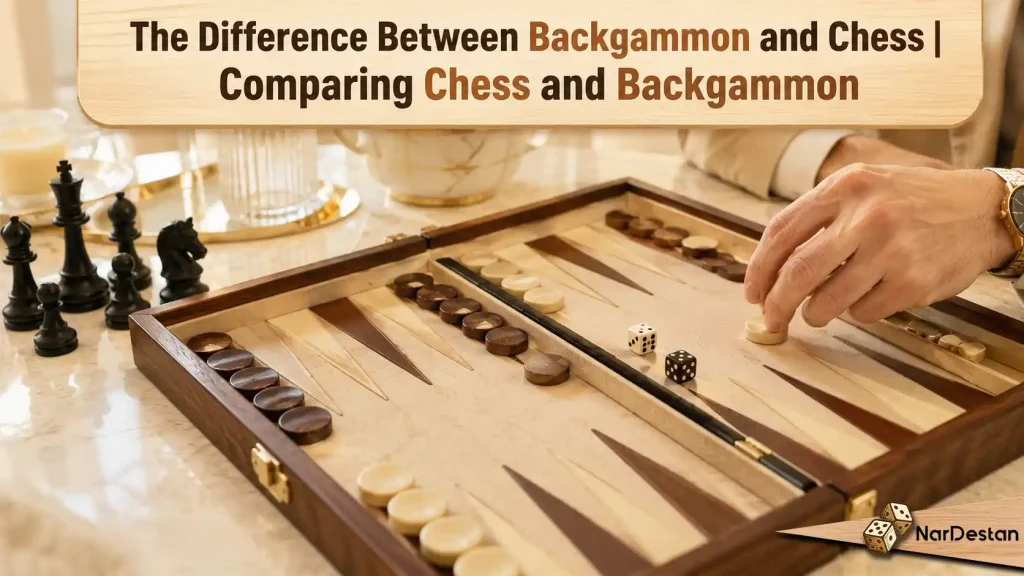
What is the difference between backgammon and chess? Both are popular mind games, but they differ completely in style and mechanics. Backgammon is a combination of luck and skill; the movement of the checkers is determined by the dice, and the player must make the best decision based on the numbers rolled. This dynamic makes the game short and exciting, giving even novice players a fair chance to compete. In contrast, chess is a purely strategic game with no element of luck; success relies on analyzing the opponent’s moves, long-term planning, and deep concentration, where even a tiny mistake can alter the game’s outcome. In this Nardestan article, we take a comprehensive look at the features of backgammon and chess, so stay with us until the end.
What is the Definition of Backgammon and Chess?
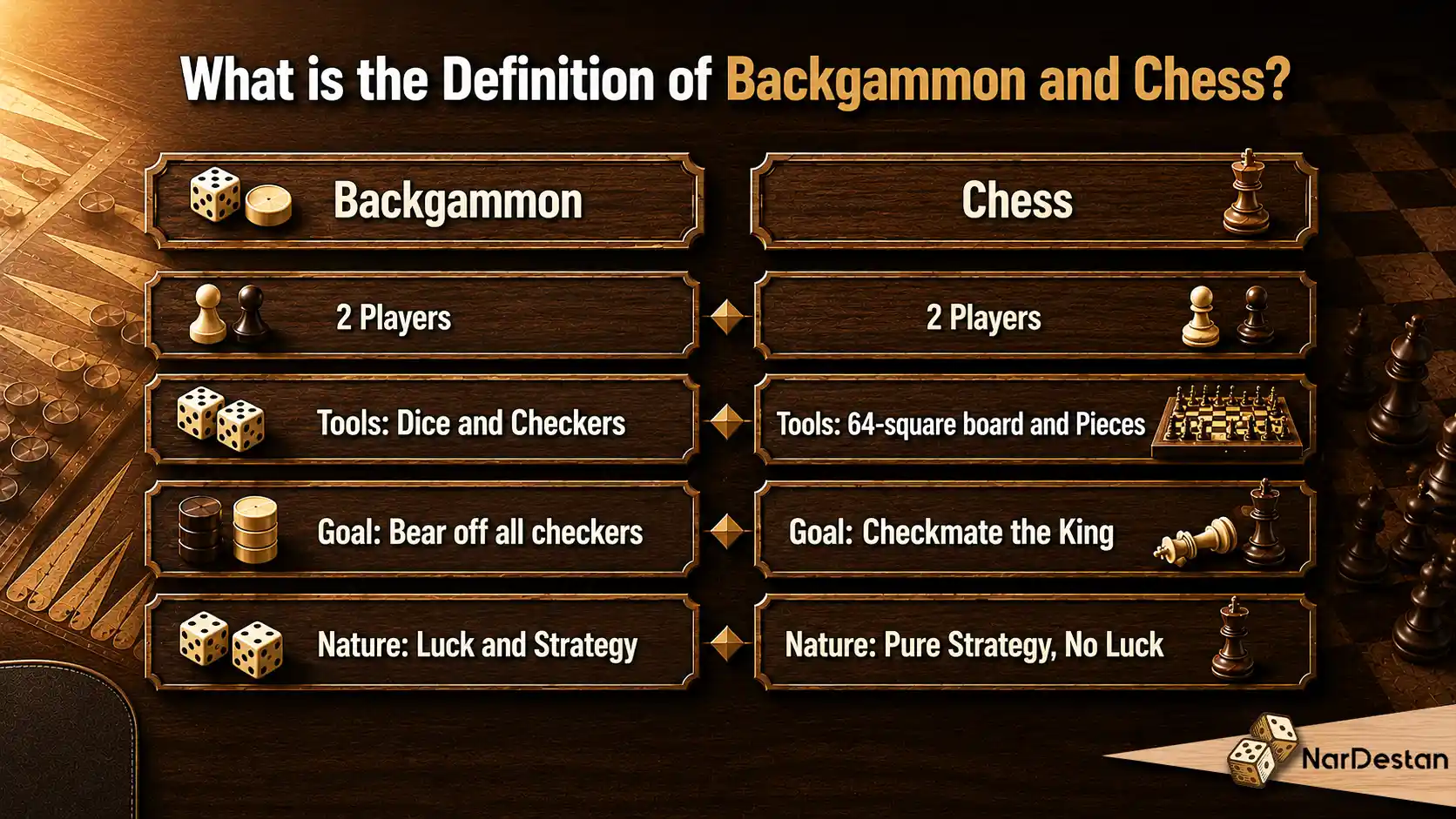
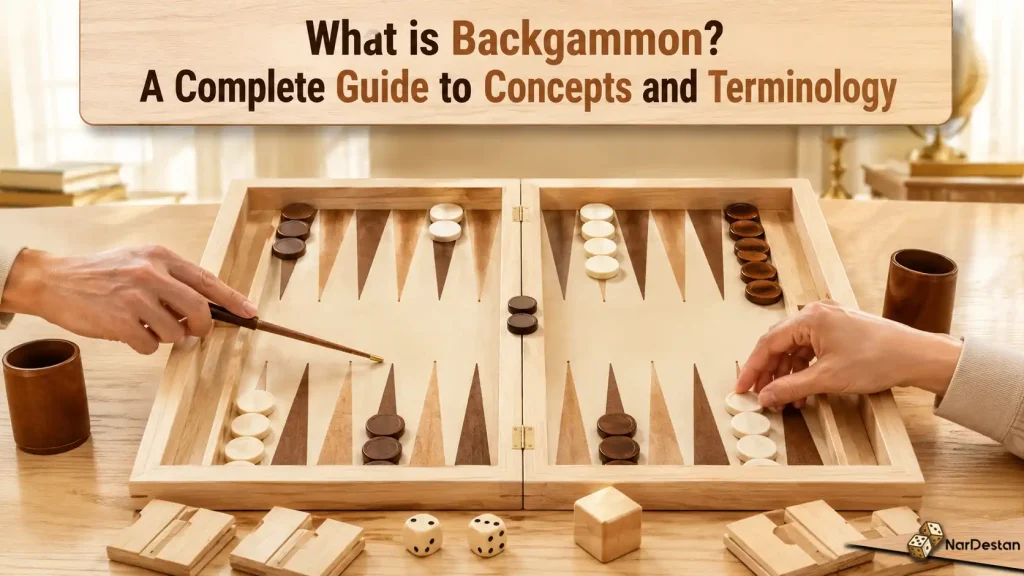
Perhaps one of the first questions is: what exactly sets these two exciting games apart? Backgammon is a two-player intellectual and recreational game played using dice and checkers. The main goal in backgammon is for players to bear off their checkers before their opponent—using rules like rolling double sixes—while knocking out the opponent’s checkers using the hitting rule. A mix of luck (the dice) and strategic decision-making plays a crucial role, making every round unpredictable.
Chess is a purely intellectual and strategic two-player game played on a 64-square board with pieces such as the King, Queen, Rook, Bishop, Knight, and Pawn. The ultimate goal in chess is to checkmate the opponent’s king. This game involves absolutely no luck, and its outcome depends entirely on skill, focus, planning, and anticipating the opponent’s moves.
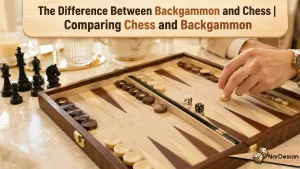
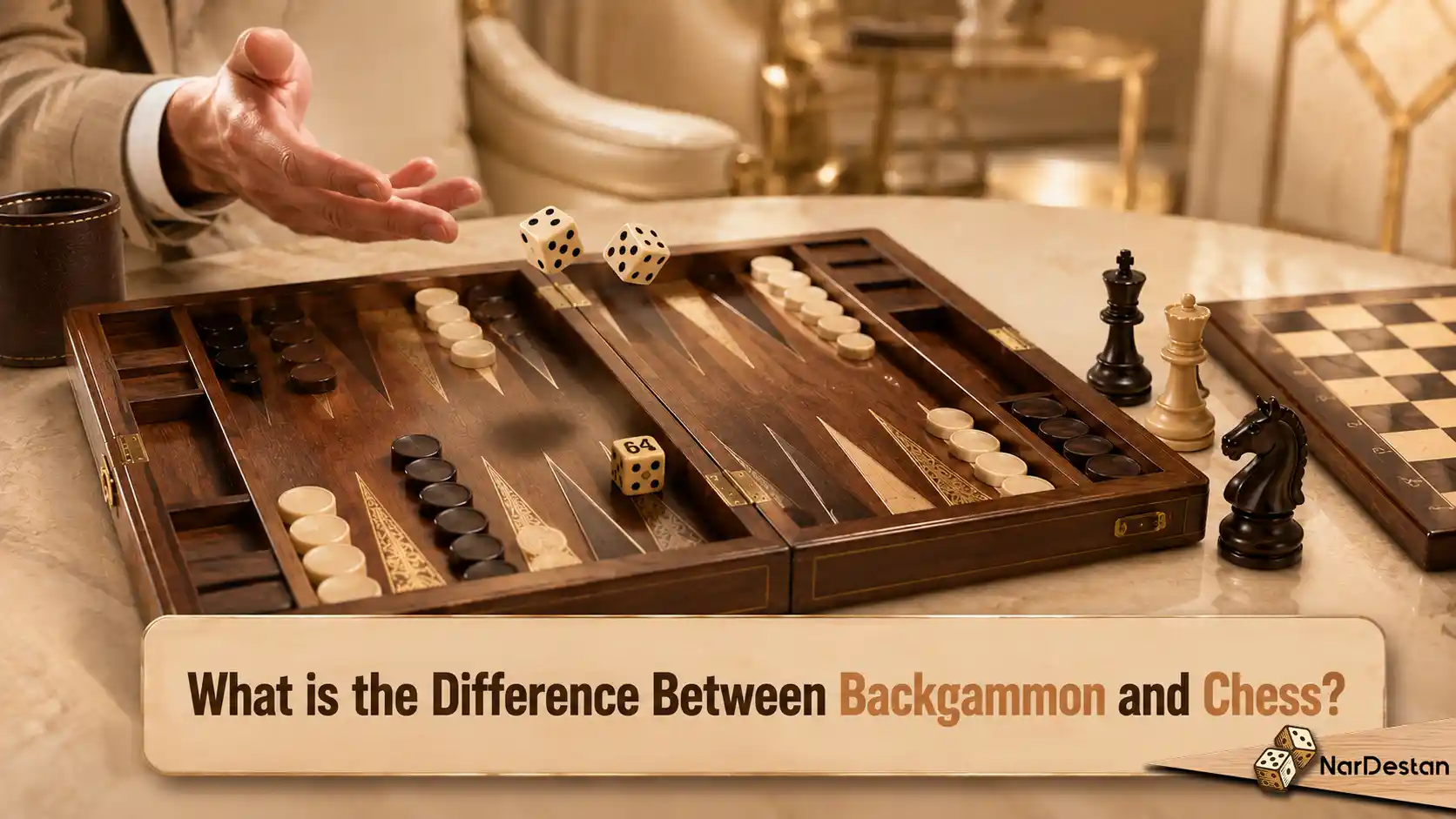
What is the Difference Between Backgammon and Chess?
| Feature | Backgammon | Chess |
| Game Type | Mind and recreational | Purely intellectual and strategic |
| Players | Two | Two |
| Equipment | Dice and checkers | 64-square board and pieces |
| Role of Luck | High (dice rolls) | None |
| Role of Skill | Important, but alongside luck | Completely reliant on skill and analysis |
| Rules | Simple and flexible (includes doubling cube) | Complex and precise (specific moves per piece) |
| Game Duration | Short (a few minutes) | Long (minutes to hours) |
| Objective | Bearing off checkers before the opponent | Checkmating the opponent’s king |
| Beginner Friendly | Yes, quick to learn | Requires more practice and experience |
Backgammon and chess are both ancient mind games that have been popular for centuries (we have detailed its concepts in our article “What is Backgammon?”). Despite their superficial similarities as brain games, their differences are highly evident in rules, the impact of luck, and the role of skill. A review of their characteristics shows that chess relies heavily on analysis, long-term planning, and mental stamina, whereas backgammon requires split-second decision-making alongside the luck of the draw. Furthermore, these two games have fundamental differences in duration, competitive style, and mental focus. Understanding these differences will help you choose the game that best fits your mood and goals. One of the main reasons for this distinction is backgammon’s reliance on dice and unique checker-movement rules—by thoroughly understanding the rules of checker movement in backgammon, you can better grasp its strategic depth.
Differences in Game Rules
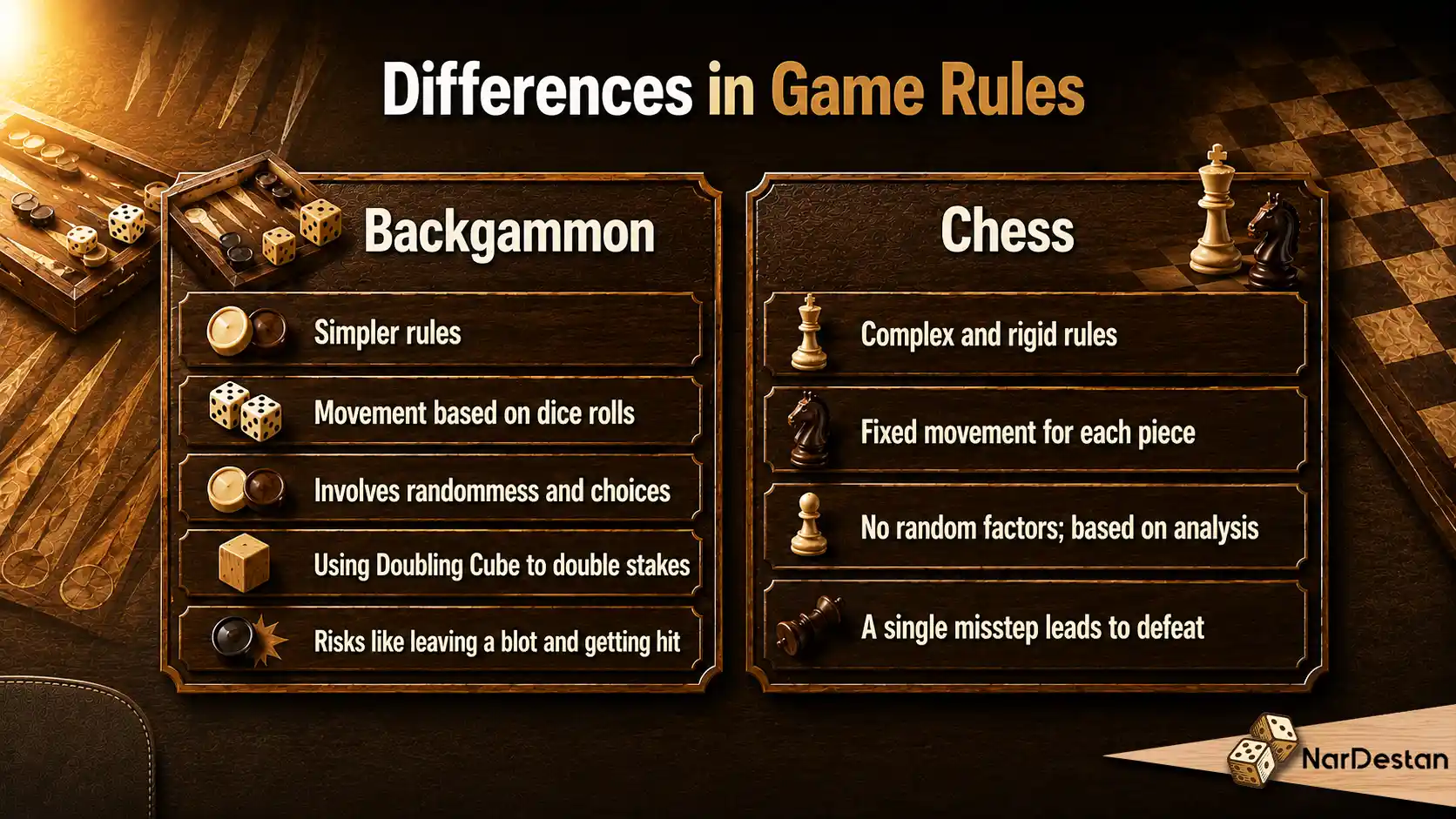
Backgammon rules are relatively simpler. The movement of checkers is dictated by the numbers on the dice, which is one of the most prominent differences between backgammon and chess. During each turn, a player must make the best possible choice based on random dice rolls. Additionally, the Doubling Cube plays a vital role; this special die allows players to offer to double the stakes of the game if they feel they have an advantage. Of course, if you plan to play online, be sure to read our “Online Backgammon Rules” article first, as the tricks and tactics of online play differ slightly from in-person games.
Conversely, chess rules are more complex and rigid. Each piece has a fixed, specific movement pattern. There are no random factors involved, and the entire match is built upon the players’ analysis, foresight, and mental abilities. This is another major aspect of their difference: in chess, even a single misstep can change the trajectory of the game and lead to defeat. On the flip side, backgammon also has plenty of nuances; for instance, a player must fully understand concepts like leaving a blot (exposing a single checker) and getting hit to outsmart their rival.
Differences in Luck and Skill
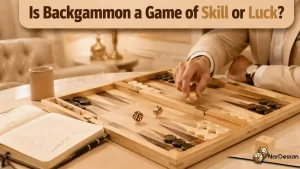
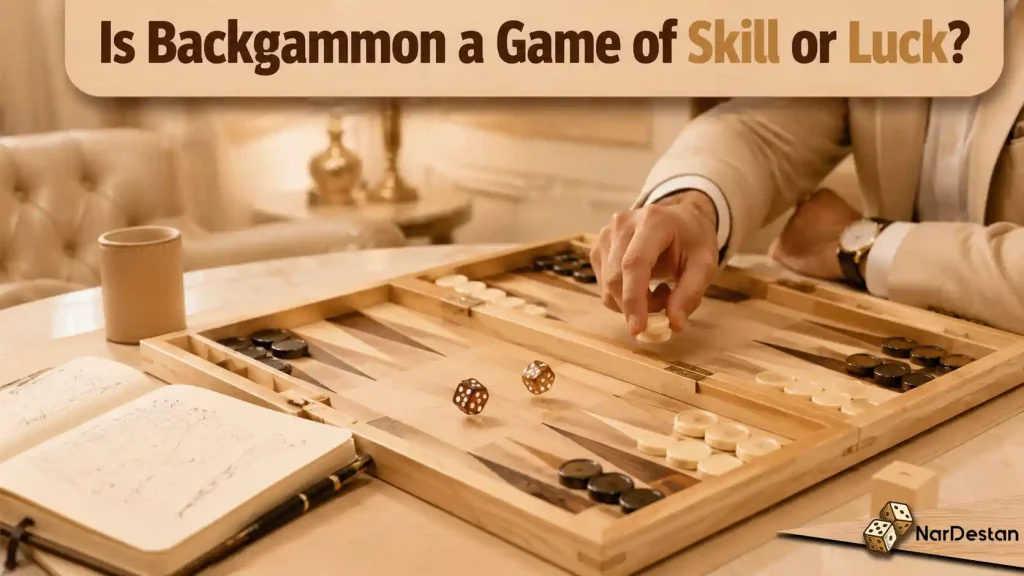
When examining backgammon and chess, it is clear that luck plays a prominent role in backgammon since a dice roll can instantly shift the balance of the game. This brings up the common question: Is backgammon a game of luck or skill? The answer is that both go hand in hand. Despite the randomness of the dice, a player’s skill in checker placement, timing, and risk management significantly impacts the final result.
In contrast, luck has practically zero influence in chess. The outcome of a chess match is dictated solely by the player’s mental acuity, analytical power, concentration, and experience. This is exactly why chess is recognized globally as a mental sport where superiority is achieved strictly through strategic thinking and precise choices. To increase your chances of winning in backgammon, we highly recommend reviewing our “List of Common Backgammon Mistakes” multiple times so you can avoid typical errors and blunders.
Differences in Game Duration
A round of backgammon is usually shorter and can be finished in just a few minutes, making it highly suitable for quick, casual entertainment with friends. On the other hand, a game of chess can last anywhere from a few minutes to several hours, especially in official tournaments where players spend a significant amount of time contemplating every single move.
Final Words: Which is Better, Backgammon or Chess?
To answer whether backgammon or chess is better, we must acknowledge that neither is inherently superior. Choosing between them depends entirely on your personal goals, mood, and experience level. Both are brilliant, ancient mind games, but they offer different learning curves and types of mental engagement.
If you are a beginner, backgammon is usually the more accessible choice. Backgammon training for beginners often starts with simple rules, rapid learning, and understanding basic checker logic. The element of luck means even newcomers can enjoy a fair chance to compete—a point that truly highlights the difference between the two games.
Chess is better suited for individuals who crave deep intellectual challenges, logical analysis, and gradual mastery. Chess beginners generally face more defeats early on because the game is entirely skill-based, demanding patience, practice, and study. However, if you have a natural inclination toward long-term strategy, chess can be an incredibly rewarding lifelong pursuit.
Frequently Asked Questions (FAQ)
What is backgammon?
Backgammon is a two-player game played with dice and checkers that combines elements of both luck and skill.
What is chess?
Chess is a purely intellectual and strategic two-player board game where the ultimate goal is to checkmate the opponent’s king.
What is the difference between backgammon and chess rules?
Backgammon has simpler rules where piece movement depends on dice, whereas chess features complex, fixed rules for each specific piece and lacks any element of luck.
Does luck play a role in backgammon?
Yes, the dice roll can instantly change the game’s circumstances, though the player’s skill remains highly important.
Does luck affect chess?
No, the outcome of a chess game relies entirely on a player’s skill, focus, and analytical abilities.
How long does a game of backgammon and chess take?
A round of backgammon typically takes a few minutes, while a chess match can last anywhere from a few minutes to several hours.
Which game is better for beginners?
Backgammon is generally more suitable for beginners due to its simpler rules and the leveling element of luck.
Who is chess best suited for?
Chess is ideal for people who are interested in deep mental challenges, logical analysis, and long-term strategic thinking.