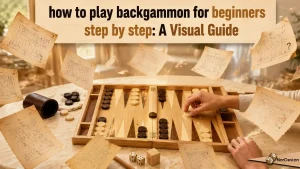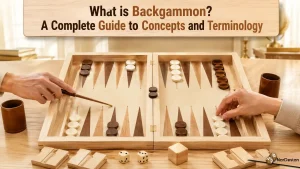




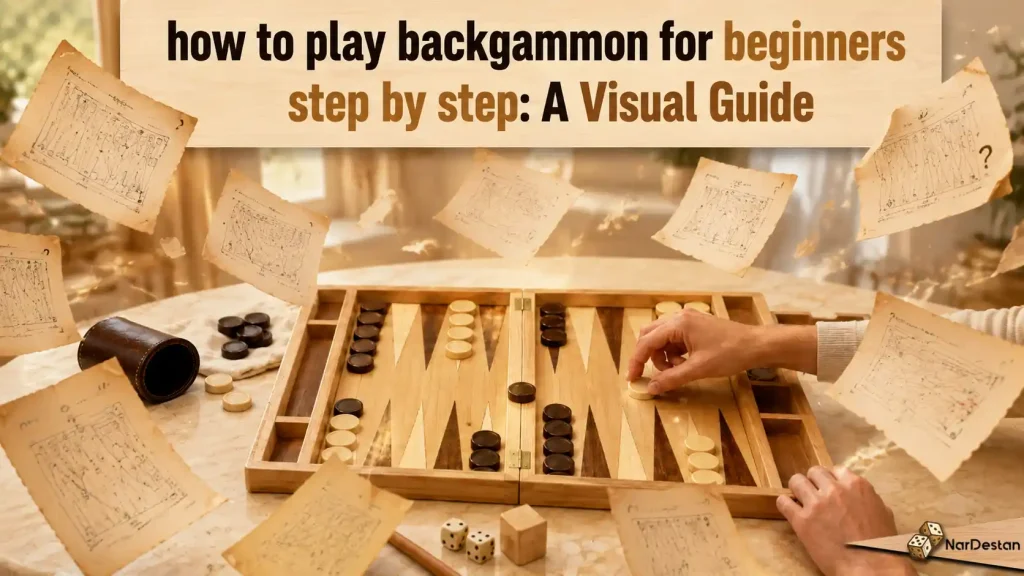
The main goal of this backgammon beginners guide is so that the novice player can thoroughly learn the basic rules and how to move the checkers from scratch, and get their checkers to the final board. Generally, the game starts with arranging the checkers on the board according to the initial setup and rolling two six-sided dice. Each die shows a number indicating how many points the checkers will move, and if both dice show the same number, you can use that same number four times to move the checkers. The ultimate goal is to bring all your checkers into the final board and remove them from the board (Bear Off). Along the way, you can hit the opponent’s single checkers and send them back to the middle of the board to increase your chances of winning. To get familiar with basic terms and techniques, stay with Nardestan until the end of this introductory backgammon tutorial article.
backgammon beginners guide
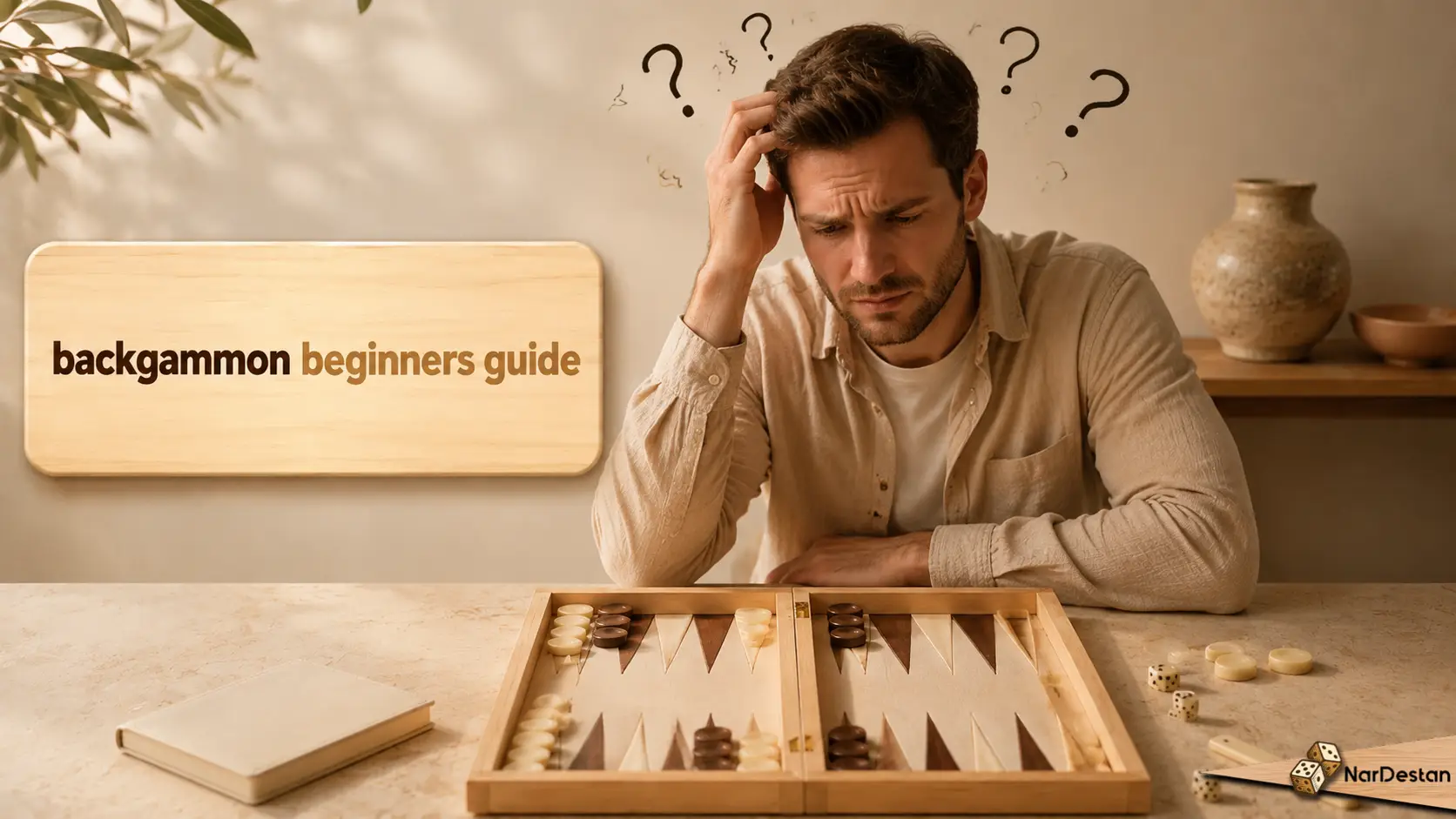
“If you are just starting out and find yourself asking, ‘what is backgammon game, and where do I even begin?’, there is no need to worry! In this guide on how to play backgammon for beginners step by step, you will learn exactly how to set up the checkers, roll the dice, and enjoy your first match.”
| Section Name | Key Points |
| Game Components | 24-point board, 15 checkers for each player, two dice, doubling cube to double the score |
| Checkers Setup | 2 on point 24, 5 on point 13, 3 on point 8, 5 on point 6; players’ setup is the exact opposite of each other |
| Rolling the Dice | Traditional: softly with fingers; Modern: with a cup or baffle box for random results |
| Checkers Movement | Based on the dice number; you can move to an empty point, your own point, or a point with only one opponent checker; the opponent’s single checker is hit |
| The Bar and Checkers Rack | The Bar: holding hit checkers; Side groove: borne-off checkers |
| Bearing Off and Winning | After all checkers enter the final board, they are borne off according to the dice numbers; normal win, Gammon (Mars), and Backgammon (Siah-Mars) with different points |
| Quick Strategy | Gathering checkers, hitting the opponent’s checker at the right time, using the double, and taking care of safe points |
1. Getting to Know the Backgammon Components: Board, Checkers, and Dice
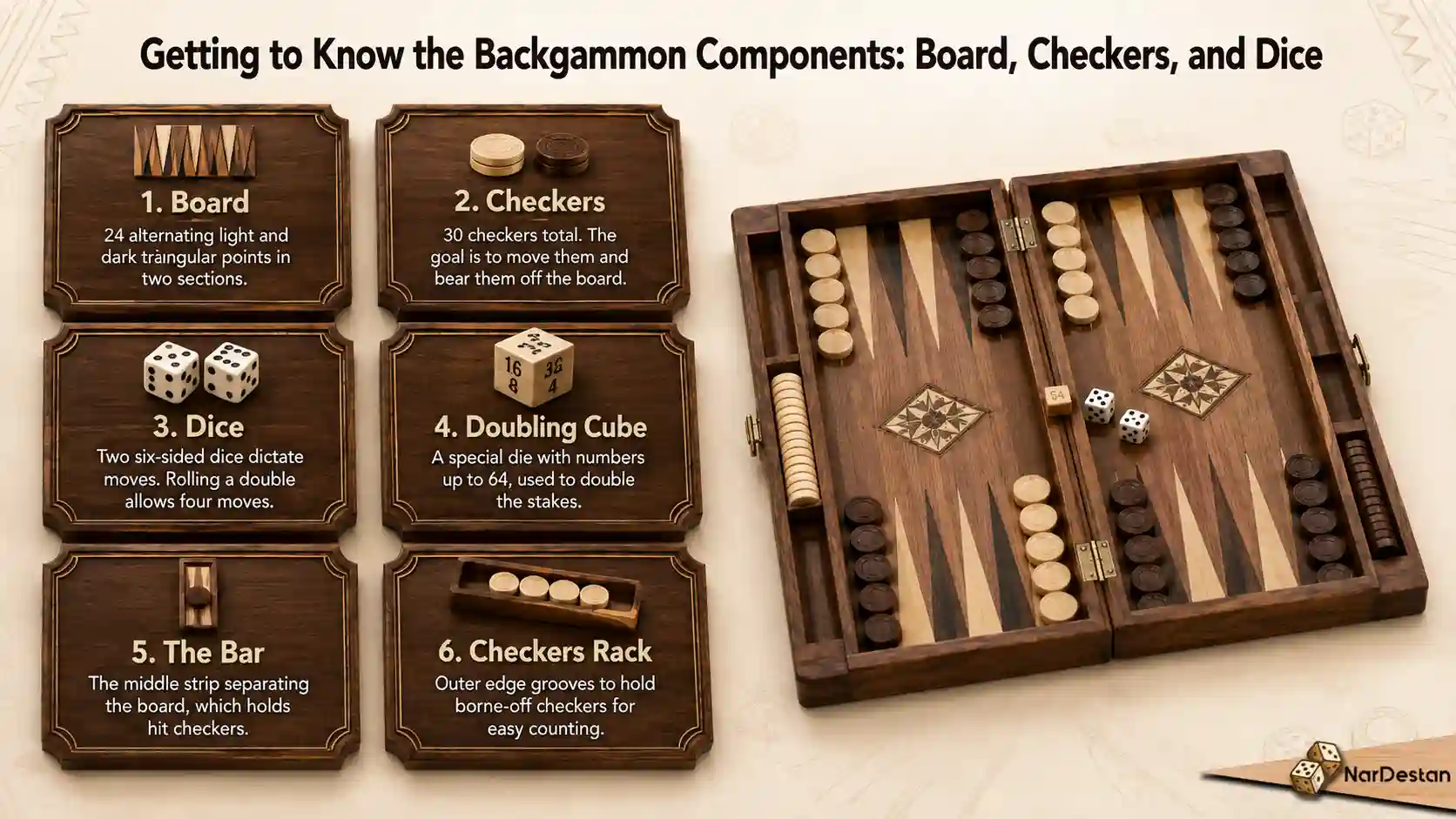
To start learning how to play backgammon for beginners, it is necessary to first get familiar with its main components. Each of these parts plays an important role in the process and outcome of the game. The most important components of backgammon include:
- Backgammon Board: The backgammon board consists of two sections, each containing 12 triangular points. In total, the board has 24 points. Each player has one side of the board and moves their checkers in a specific direction. The points alternate in light and dark colors so the movement path of the checkers is seen more clearly.
- Backgammon Checkers: One of the most important parts in backgammon training for beginners is understanding the checkers and how they move. There are a total of 30 checkers in the game, with each player having 15 checkers in their specific color (usually white and black). These checkers are placed on the board’s points and move according to the number rolled on the dice. Each player’s goal is to get all their checkers to the final board and remove them from the board. This stage is technically called “gathering the checkers” or Bear Off, which marks the end of the game and the time to determine the winner.
- Dice (Torreh-ha): Two six-sided dice are used in the game of backgammon. The number that appears on each die determines how many points the checkers should move. If both dice show the same number (for example, 3 and 3), it is called a pair or Double. In this case, according to the backgammon double dice rule, the player can move four times with the same number, which is considered an excellent opportunity for rapid advancement in the game.
- Doubling Cube (Double Cube): In basic backgammon training, familiarizing yourself with the doubling cube is of special importance. The doubling cube is a special die with the numbers 2, 4, 8, 16, 32, and 64 printed on it, and it is used to double the score or stakes of the game. A player can offer to “double” at the right time, and the opponent can accept or reject it. Using the doubling cube is more common in professional games.
- The Bar (Bar): The bar is one of the main components of the backgammon board that often goes unnoticed. This vertical strip is located in the middle of the backgammon board and separates its two halves. Its main purpose is to hold the checkers that have been hit by the opponent; meaning, any checker placed on the bar, until it returns to its initial position on the board, the owner of that checker is not allowed to move any other checker. This location plays an important role in the game’s strategy and limiting the player’s moves.
- Checkers Rack Section: Some backgammon boards have hollow spaces or grooves on their outer edges that have a very important function in the game. These grooves are a place to put the checkers that have been removed from the game (Bear Off), helping players easily count the number of borne-off checkers. By using this space, players can clearly see who is ahead and avoid mistakes in counting the checkers, which makes the game flow smoother and clarifies the players’ strategies.
2. backgammon board setup for beginners
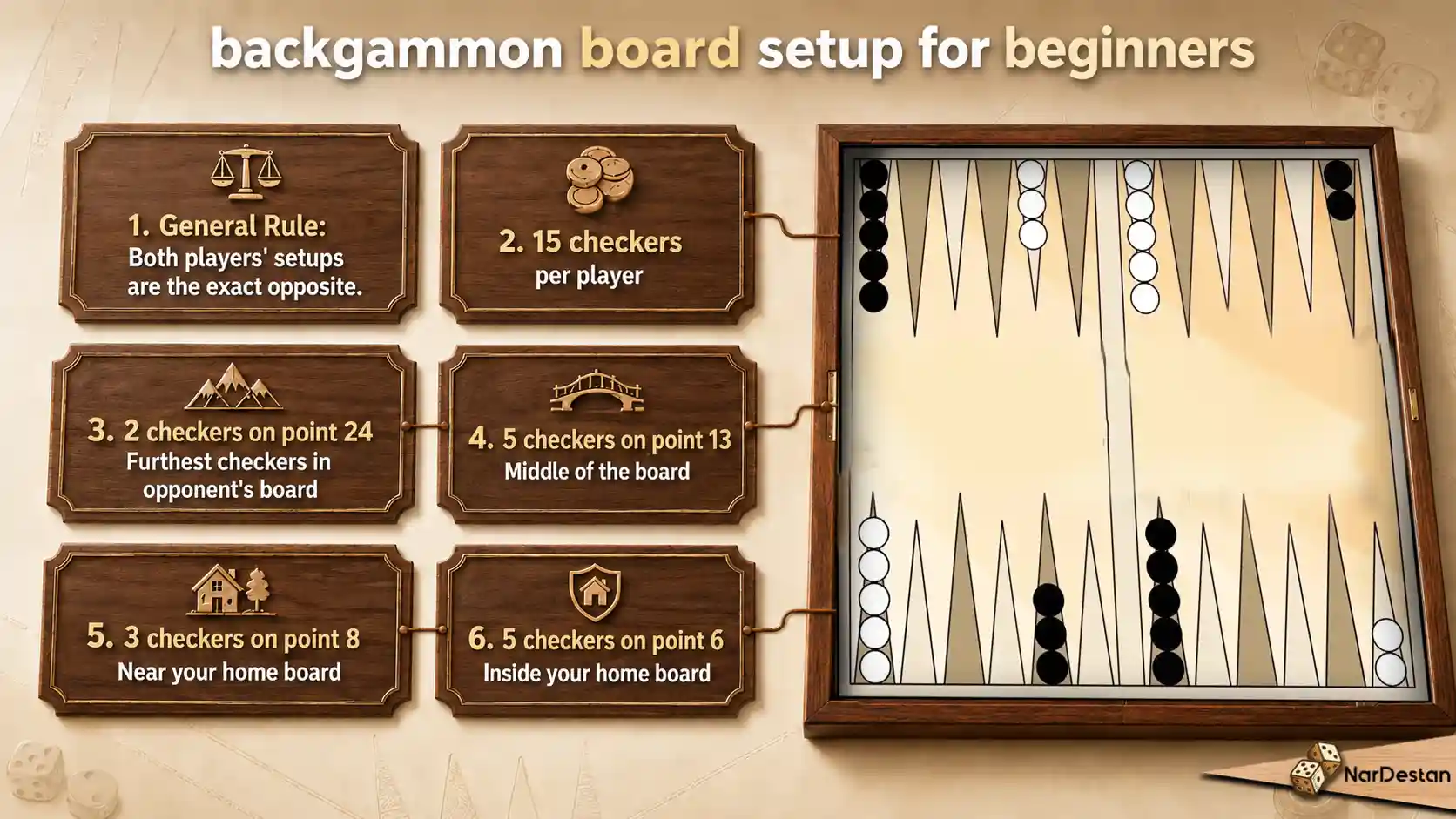
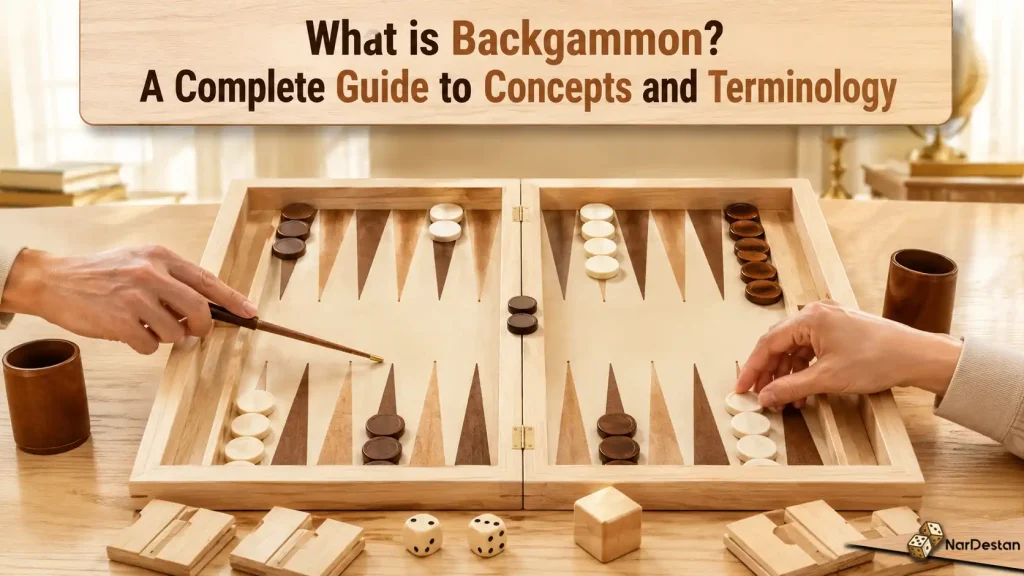
Setting up the checkers initially might seem a bit complicated to some players, but when exploring how to set up a backgammon board for beginners, there is a simple and general rule: the checker setup for both players is the exact opposite of each other. Each player has 15 checkers that must be placed in the following order based on the numbering of the points (from 1 to 24):
- 2 checkers on point 24: These are your furthest checkers (in the opponent’s starting board).
- 5 checkers on point 13: These checkers are placed in the middle of the board, right across from you.
- 3 checkers on point 8: These checkers are located near your home board.
- 5 checkers on point 6: These checkers are placed in the main position of your home board.
3. Dice Rolling Basics
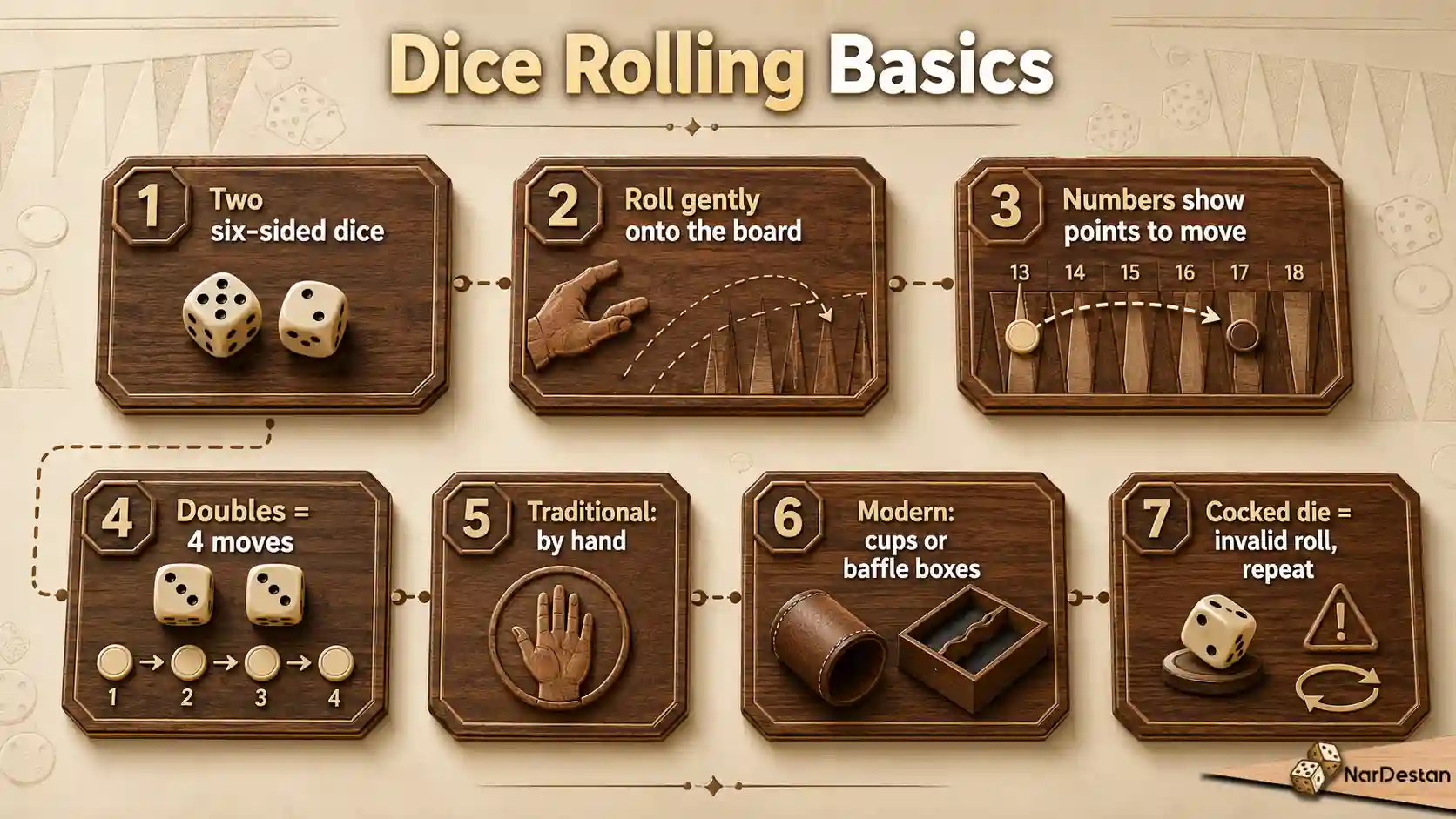
Among other important things in backgammon beginners lessons is how to roll the dice, which is different in traditional and modern backgammon. In traditional backgammon, the dice are held with the fingers and rolled with a soft motion onto the right half of the board so that they spin completely randomly and the numbers appear. However, in modern backgammon, to ensure complete fairness and eliminate any manual interference, a special cup or slanted boxes (baffle boxes) are used so that the dice land on the board entirely by chance after sufficient spinning. An important point for beginners is that if a die lands on a checker or stands at an angle (cocked die), the roll is invalid and must be repeated so the game progresses based on true luck and strategy.
- The game is played with two six-sided dice.
- Roll the dice onto the board with a gentle motion.
- The number on each die shows how many points each checker can move. If both dice show the same number (e.g., 3 and 3), you can make four moves with that same number.
4. Backgammon Moves for Beginners
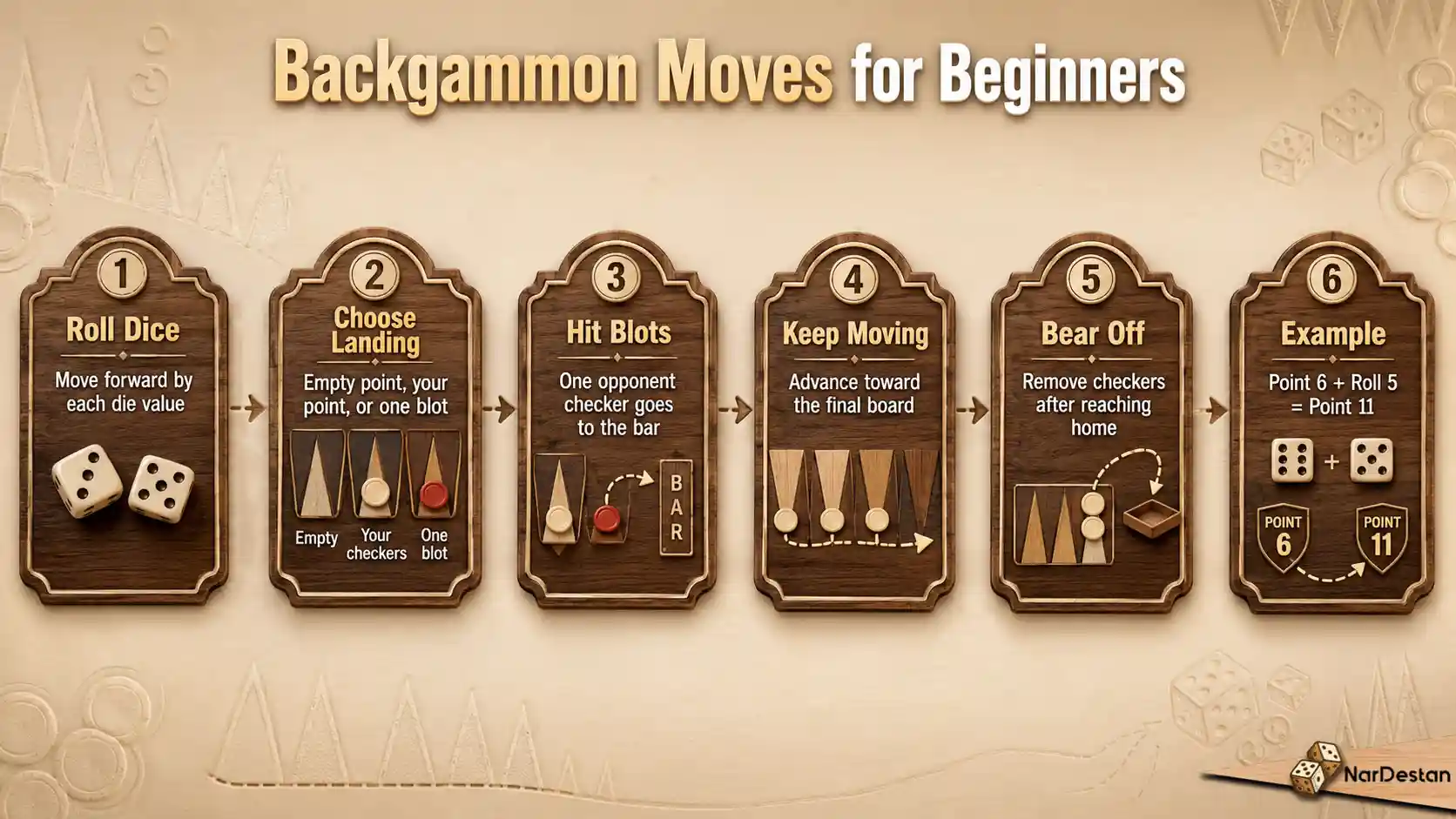
In this section of easy backgammon for beginners, we understand how the checkers move. In fact, each checker moves forward based on the number rolled on the dice and can only go to a point that is empty, has your own checkers, or has only one opponent checker. If there is a single opponent checker on a point, it can be hit, and the opponent’s checker returns to the starting board. The ultimate goal is for the checkers to reach the final board and be removed from the board. For example, if your checker is on point number 6 and the dice rolls a 5, your checker goes to point number 11. If there is only one opponent checker on this point, that checker is hit and returns to the starting point.
5. Training on How to Hit the Opponent’s Checker in Backgammon
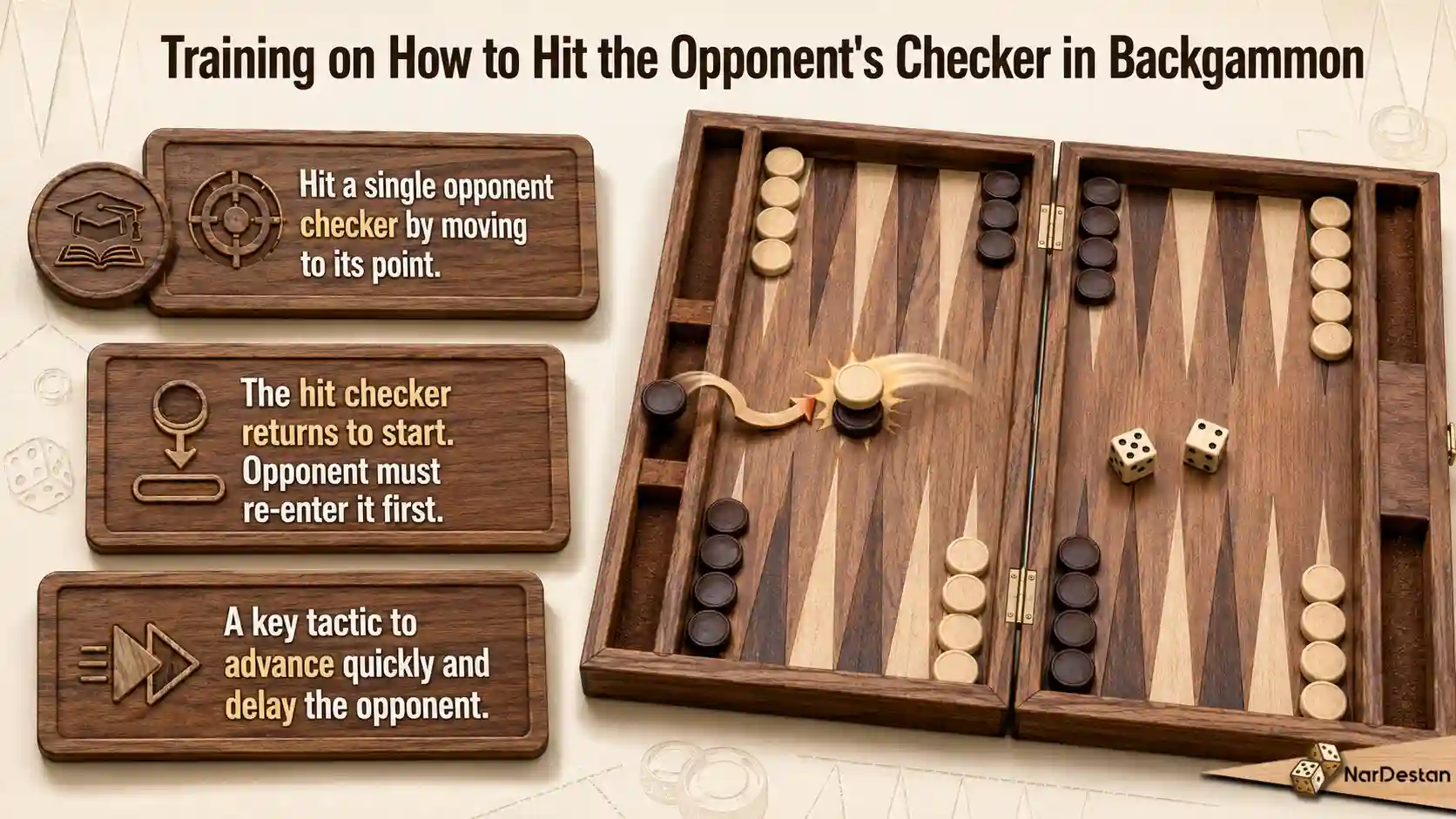
- If there is a single opponent checker on a point, you can move your own checker to that same point and hit the opponent’s checker.
- The hit checker returns to the starting board, and the opponent must re-enter it into the game before making any other move. Hitting the opponent’s checker is an important tactic that can increase your chances of advancing quickly and holding the opponent back.
6. Bearing Off: Removing Checkers from the Board
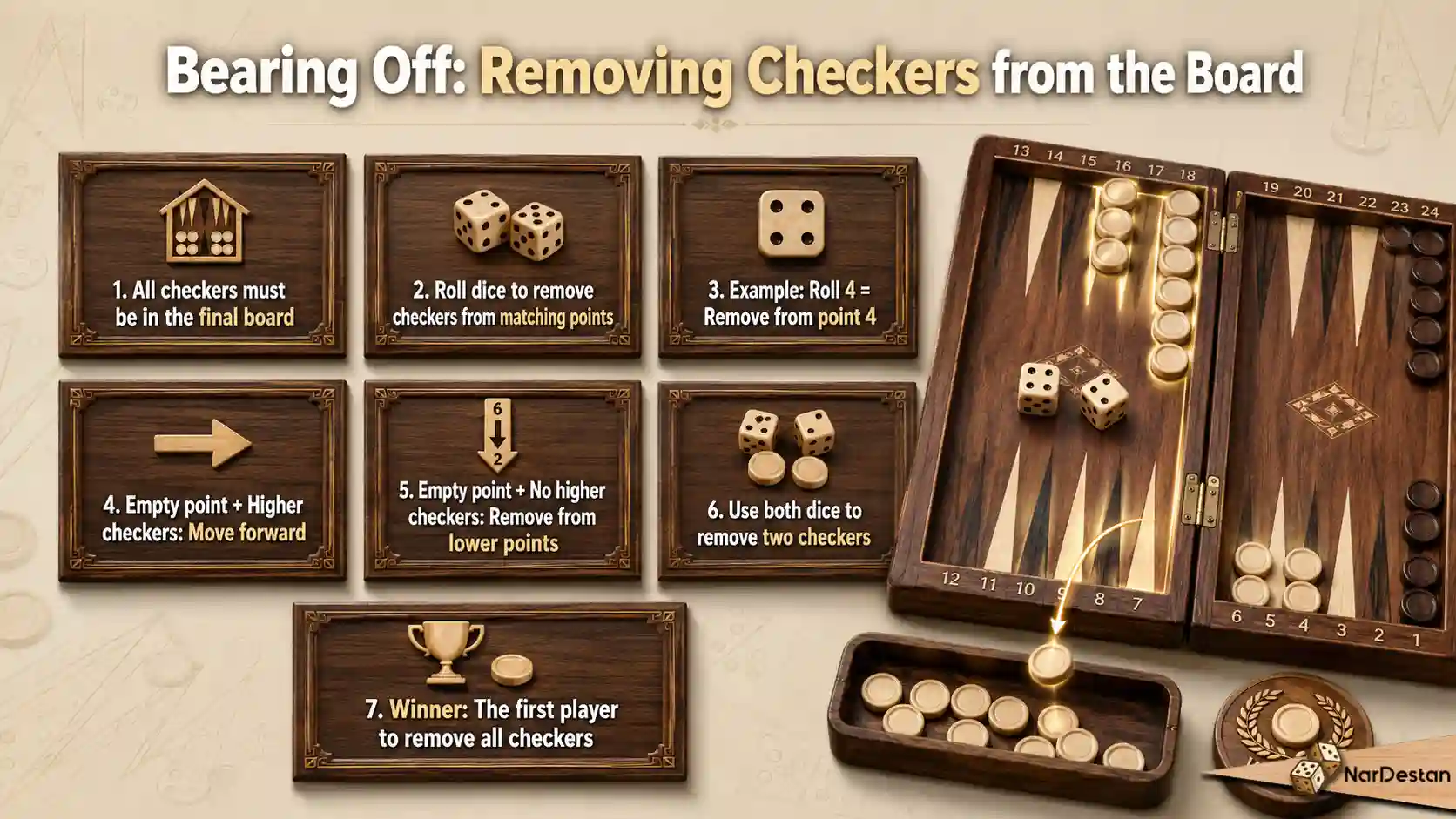
When all your checkers have entered the final board, the last stage of the game begins: bearing off (removing) the checkers from the board.
- Every time it is your turn, you roll the dice, and the dice number indicates which checker you can remove from the board.
- For example, if the dice number is 4, you can remove one checker from point number 4.
- If the destination point is empty and there are checkers on higher points, the checker must move according to the dice number. But if there are no checkers on higher points, the player is allowed to remove checkers from lower points.
- In case both dice yield a number that allows two checkers to be removed, both checkers can be taken out according to the dice number.
- Important point: The goal is to remove all checkers from the board. The first player to bear off all their checkers is the winner of the game.
Types of Backgammon Boards for Newcomers
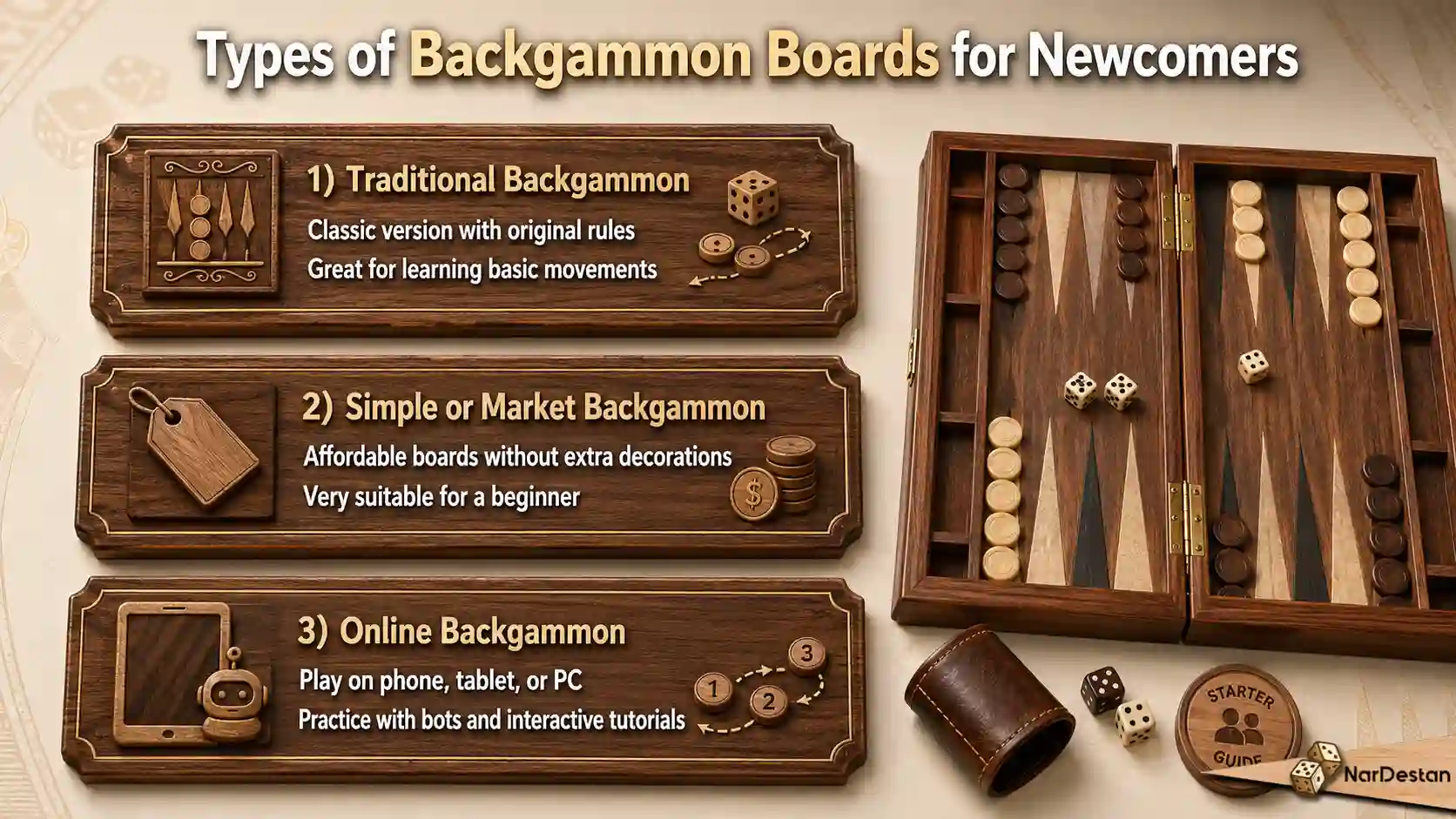
For newcomers, getting familiar with the types of backgammon boards can make learning simpler and more attractive. In the path of how to learn backgammon for beginners, it is better to start with backgammon boards whose rules are simple and understandable. The most important backgammon boards suitable for beginners include:
1. Traditional Backgammon:
Traditional backgammon is the classic and old version of the game, played with original Iranian rules. This style is suitable for introductory backgammon training because it helps players learn checker movements, dice rolling, and basic rules well.
2. Simple or Market Backgammon:
Market backgammon includes simple and cheap boards and checkers without specific decorations, therefore it can be a very suitable option for someone needing a beginner backgammon board.
3. Online Backgammon Game:
The digital backgammon version, which can be run on a phone, tablet, or computer, provides the opportunity to practice with other players or bots and view interactive tutorials. For this reason, if you are a beginner, online backgammon can also be a good option.
List of Backgammon Game Terminology
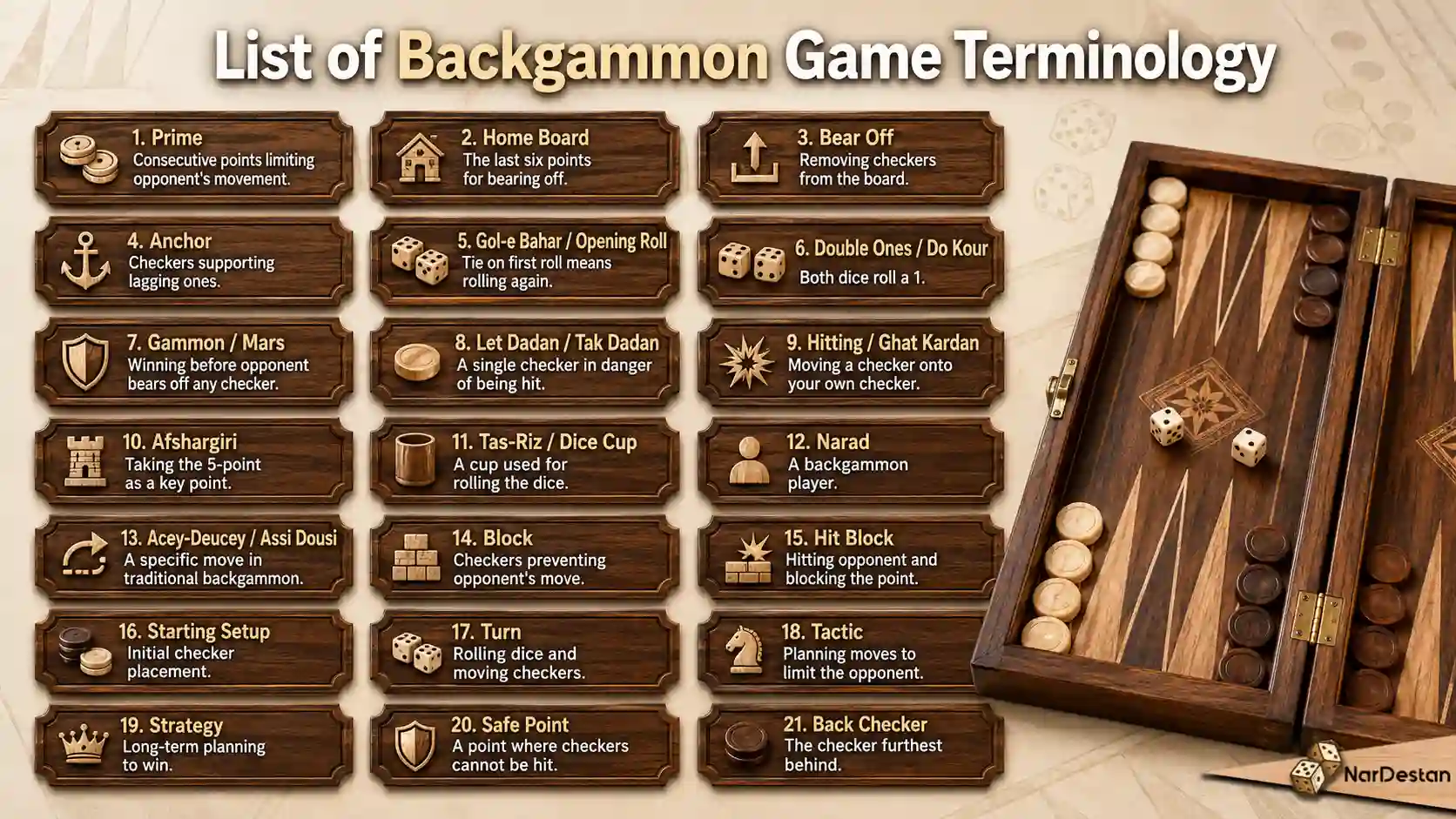
One of the most important skills in a comprehensive beginners guide to playing backgammon is complete familiarity with common game terminologies. Knowing these terms helps you better understand checker movements, rules, and strategies, making it easier to learn the game.
- Prime: A chain of consecutive points filled with your own checkers, limiting the opponent’s movement.
- Home Board: The last six points of each player where the checkers must arrive to be borne off.
- Bear Off: Removing checkers from the home board and moving them off the board.
- Anchor: Checkers placed on a point to support lagging checkers.
- Gol-e Bahar (Opening Roll): At the start of the game, if both players roll the same number on the dice, the dice must be rolled again. This continues until one of the players rolls a higher number to determine who starts the game.
- Double Ones (Do Kour): A local term for when both dice roll a 1. This term is also known as Joft-khaal or Joft-koor.
- Gammon / Mars: When a player bears off all their checkers but the opponent has not yet borne off a single checker from the board; the score is doubled.
- Let Dadan or Tak Dadan: When a single checker is placed on a point and is in danger of being hit.
- Hitting (Ghat Kardan): Moving a checker onto your own checkers (in backgammon, the act of taking a checker that is in the opponent’s firing line and placing it on your own checkers is called this).
- Afshargiri: Taking your own or the opponent’s 5-point as a key strategic point.
- Tas-Riz (Dice Cup): A small cup-like cylinder used for rolling the dice.
- Narad: A backgammon player; someone who plays the game.
- Acey-Deucey (Assi Dousi): A local term for a specific move or checker situation in traditional Iranian backgammon sources.
- Block: Two or more checkers on one point that prevent the opponent from moving to that point.
- Hit Block: The combination of hitting the opponent’s checker and creating a block on a point.
- Starting Setup: The way checkers are placed at the beginning of the game.
- Turn: Each time a player rolls the dice and moves the checkers.
- Tactic: Planning the checkers’ moves to advance the game and limit the opponent.
- Strategy: Long-term decision-making to win the game and manage checkers.
- Safe Point: A point that doesn’t have a single checker, meaning the opponent cannot hit it.
- Back Checker: A checker that has not yet moved from the starting board and is further behind the other checkers.
List of Basic Backgammon Rules for Beginners
Another important aspect of teaching this game is familiarizing newcomers with the basic backgammon rules for beginners. In the table below, the most important backgammon rules are briefly and understandably presented for novices:
| Beginner Backgammon Rule | Short Explanation |
| Number of Checkers and Setup | Each player has 15 checkers, and the checkers are set up symmetrically. |
| Rolling the Dice | Two six-sided dice; the dice number determines how many points a checker moves. Double = four moves. |
| Checker Movement | You can move to an empty point, your own point, or a point with only one opponent checker. |
| Hitting the Opponent’s Checker | A single opponent checker can be hit, and that checker returns to the starting board. |
| Bearing Off Checkers | When all checkers are in the final board, they are borne off the board with the dice numbers. |
Scoring in Backgammon for Beginners
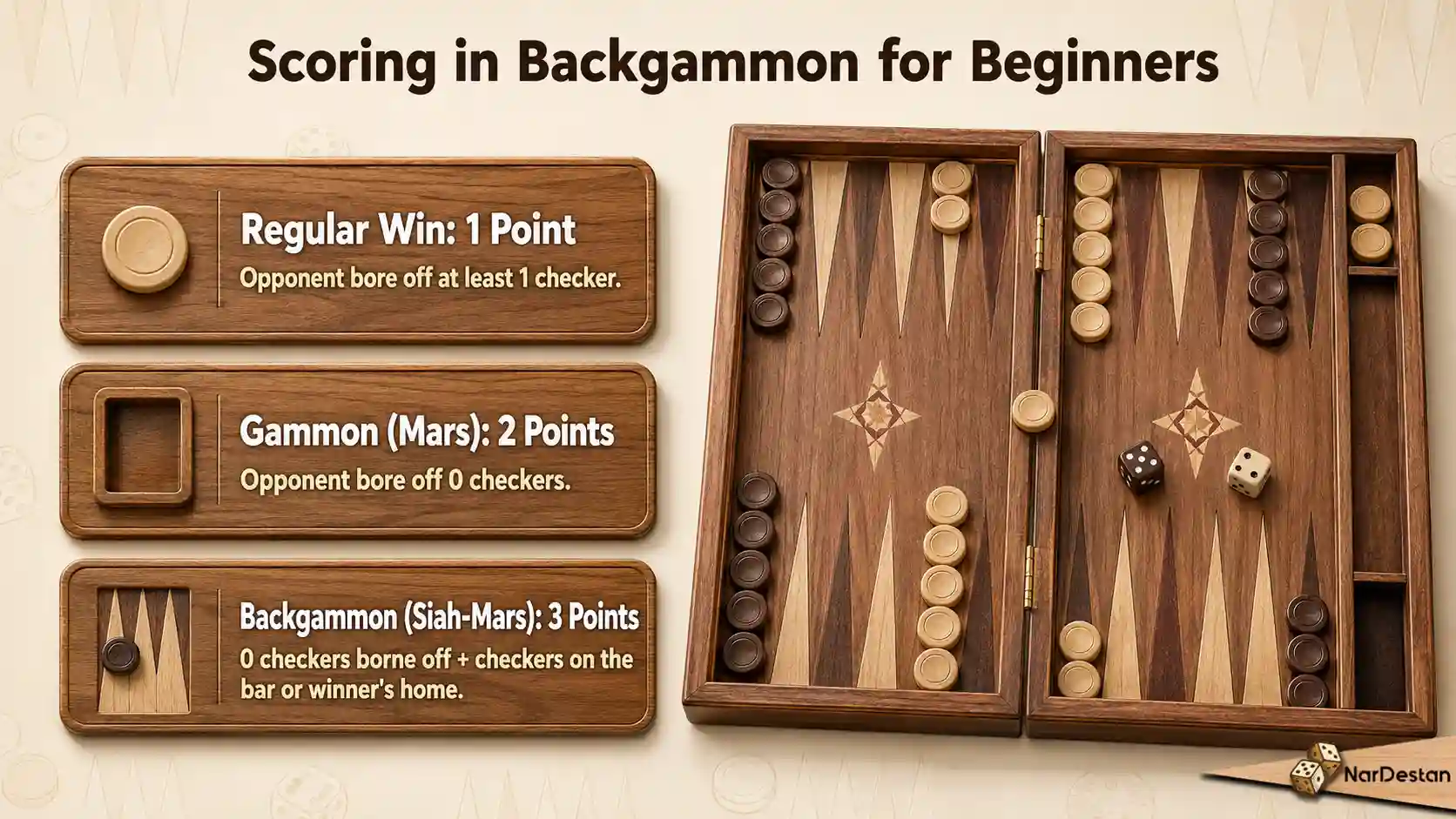
At the end of each game, based on the position of the opponent’s checkers, a different score is awarded to the winner, which is essential for every beginner to learn; if the opponent has borne off at least one checker, you have a regular win (1 point). But if you finish the game before the opponent even bears off a single checker, you have Gammoned (Mars) them and get 2 points. In more professional levels and modern backgammon rules, there is a situation called Backgammon (Siah-Mars) or Sag-Mars; this happens when you have finished the game, but the opponent hasn’t borne off any checkers yet and has at least one checker remaining on the “bar” (middle of the board) or in your “home board,” in which case you earn 3 sweet points. Understanding this is key to mastering scoring in backgammon for beginners.
How to Win at Backgammon for Beginners
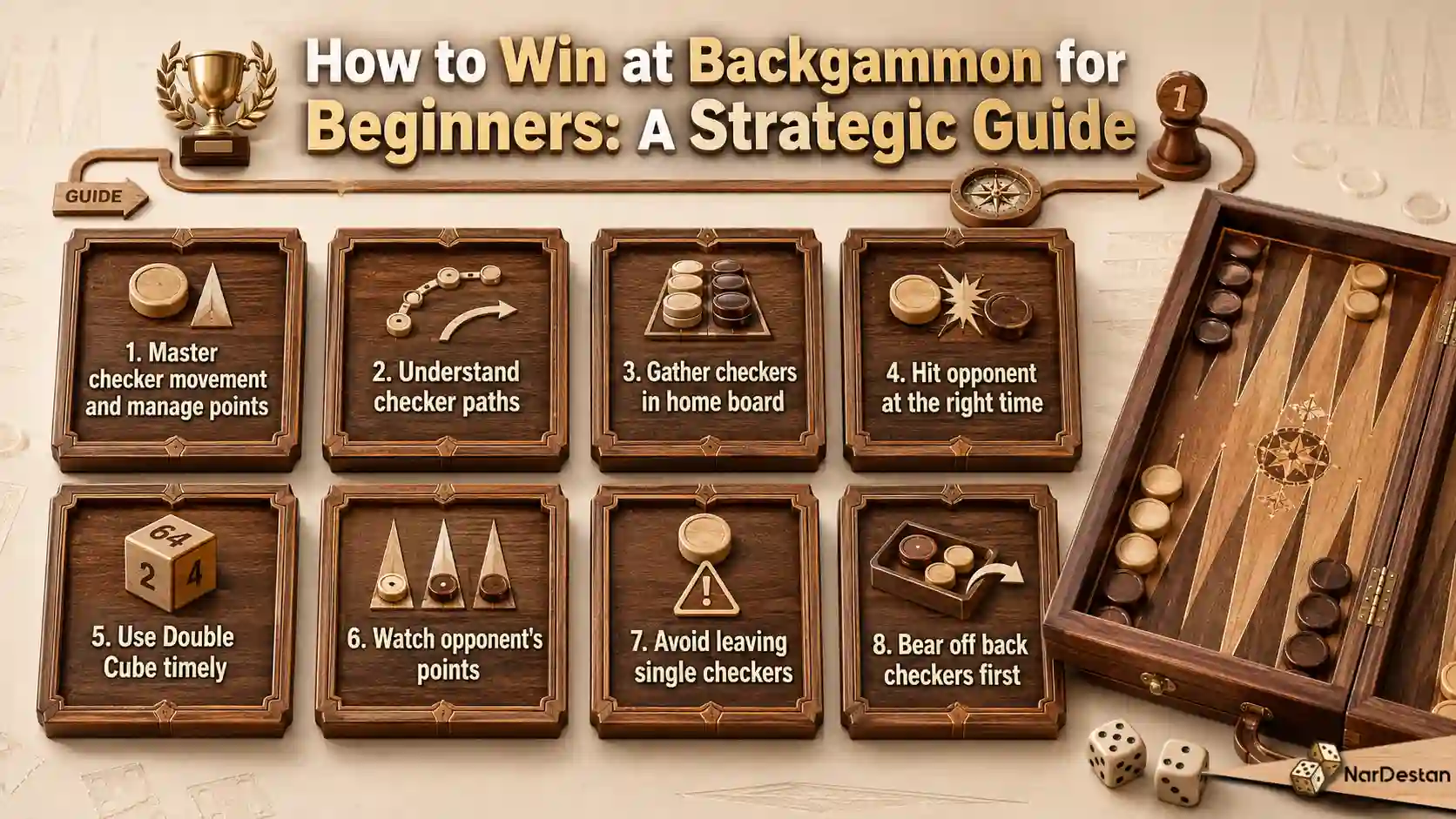
A winning guide in simple backgammon training for beginners means that the novice player knows how to move the checkers, manage the points, and ultimately discover how to win at backgammon for beginners.
- Understanding the movement path of the checkers.
- Focusing on gathering checkers in the home board.
- Hitting the opponent’s checker at the right time.
- Timely use of the Double Cube.
- Paying attention to the points where the opponent’s checkers are located.
- Not leaving a single checker on open points where there is a possibility of being hit by the opponent.
- When all checkers reach the final board, bear them off according to the dice number. It is better to bear off the checkers further back first to reduce lost chances and opportunities, so the game progresses with planning.
Backgammon Beginner Mistakes
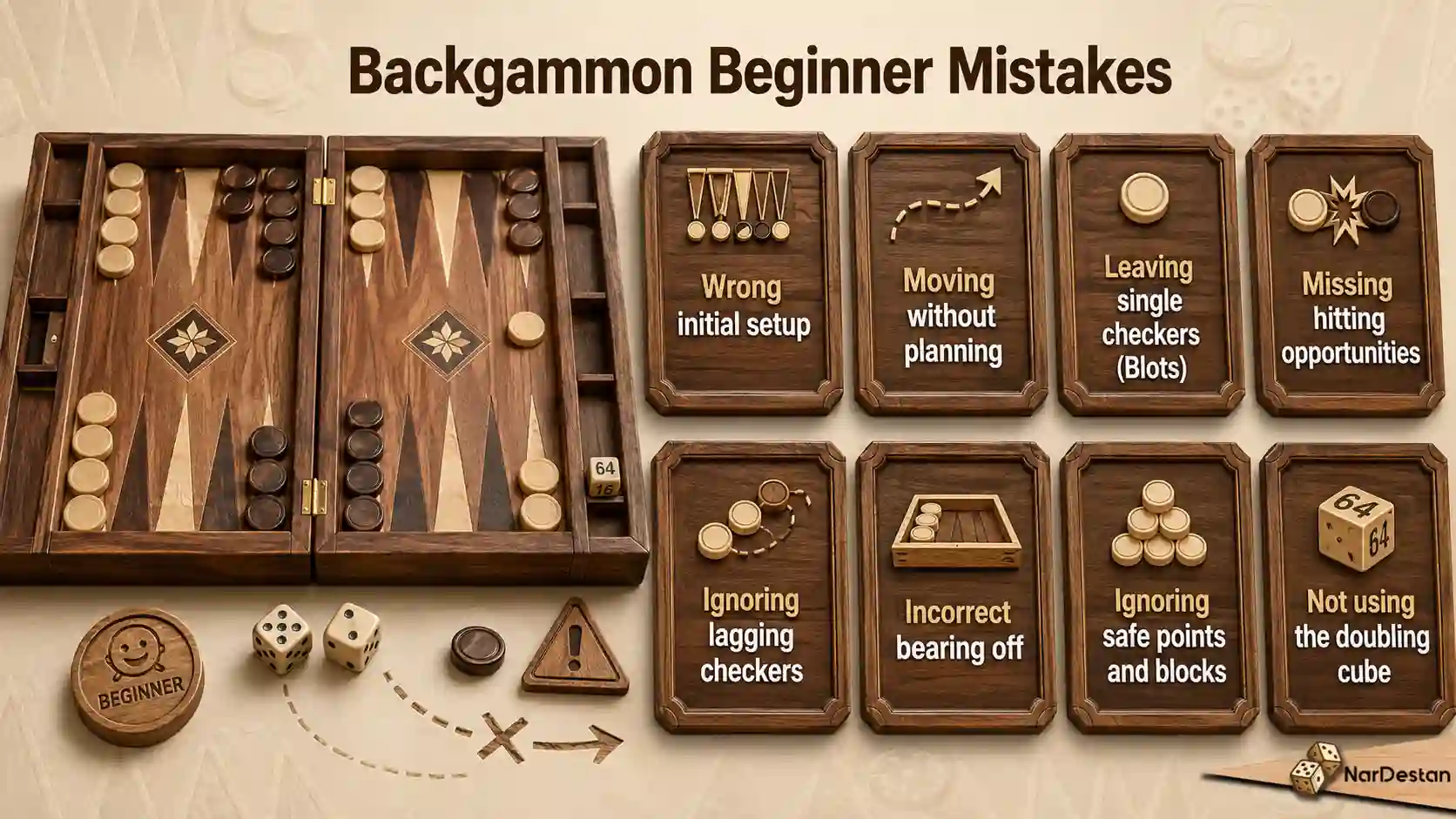
Common backgammon beginner mistakes include:
- Not being familiar with the initial checker setup.
- Moving checkers without planning: Many beginners just push checkers forward without paying attention to blocks, single checkers, and the opponent’s strategy.
- Leaving single checkers (Blot): A single checker on a point is easily hit and can reduce the speed of progress.
- Ignoring the opportunity to hit the opponent’s checker (Hitting).
- Focusing on one part of the board and ignoring the rest of the checkers; beginners sometimes only move the front checkers and forget the lagging checkers.
- Bearing off checkers incorrectly: Checkers must be borne off according to the dice number and starting from the back points first; wrong moves lead to lost opportunities.
- Ignoring safe points and blocks.
- Not using the double cube.
Who is this Beginner Backgammon Guide For?
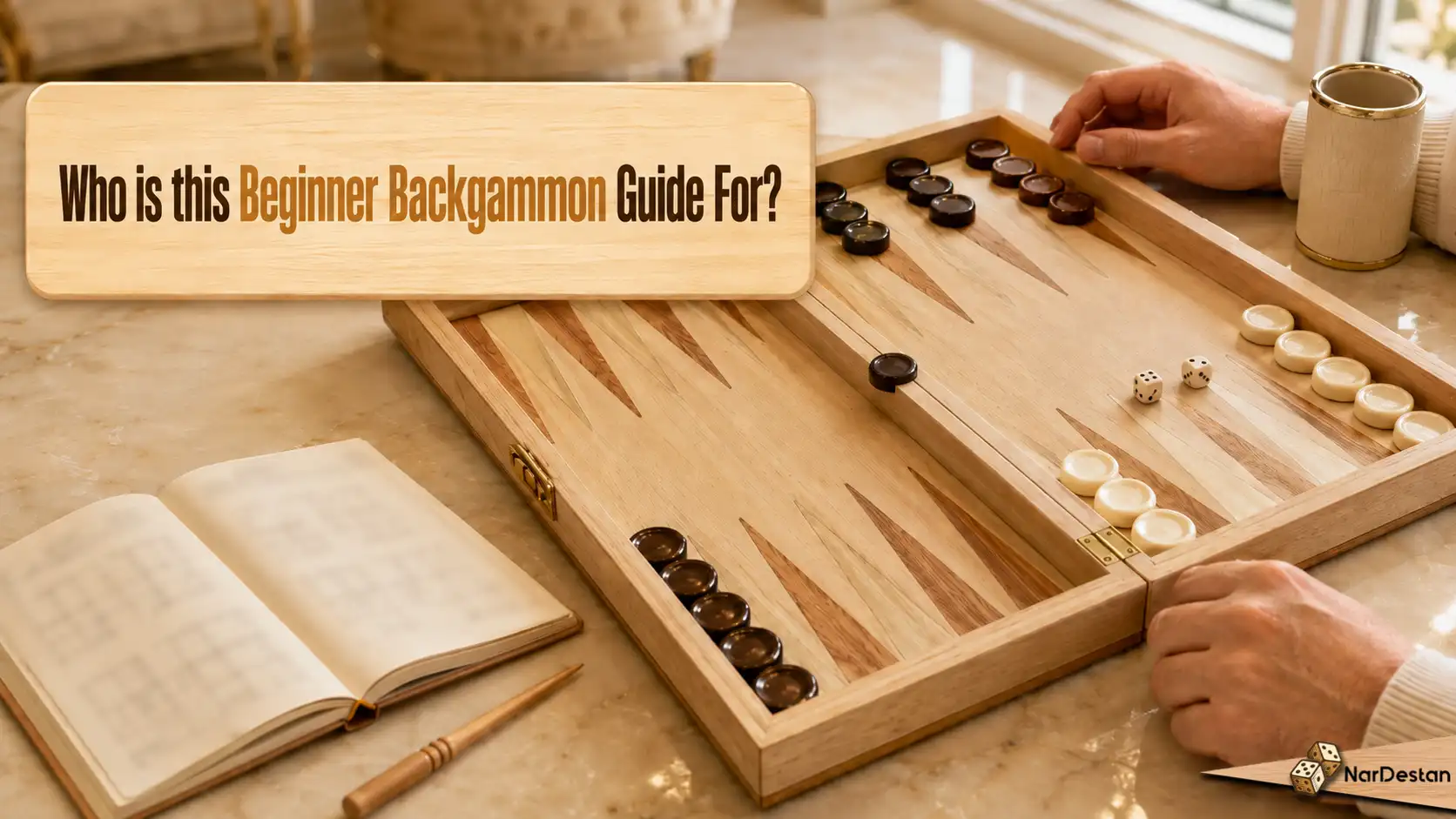
Backgammon training for beginners is suitable for individuals who are just looking to get acquainted with this game and have no prior experience. This training helps you easily learn the basic rules and terminologies, practice checker movements and dice rolling, and strengthen your basic strategy skills. By using simple backgammon for complete beginners tutorials, novices can visually see the steps of the game and gradually turn into confident and skilled players, enjoying the game.
Frequently Asked Questions (FAQ)
How do we move the checkers?
With the dice number, the checkers move to an empty point, your own point, or the opponent’s single checker.
What is the main goal of the game?
Bearing off all the checkers from the final board before the opponent.
How do we hit the opponent’s checker?
If there is a single checker on a point, it can be hit and sent to the starting board.
What is the Double dice?
When both dice show one number, four moves are made.
Which is the Home Board?
The last six points of each player where the checkers must arrive to be borne off.
What is a Blot?
A checker that is placed alone on a point and is exposed to being hit.
How do we start the game?
By rolling the dice, and the player who rolls a higher number starts the initial move.
How is backgammon training for children done?
Backgammon training for children is done with simple rules, checker movements, dice rolling, and a fun game in a step-by-step and visual manner.