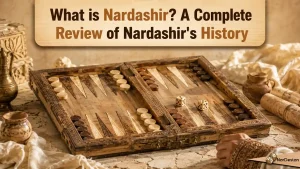




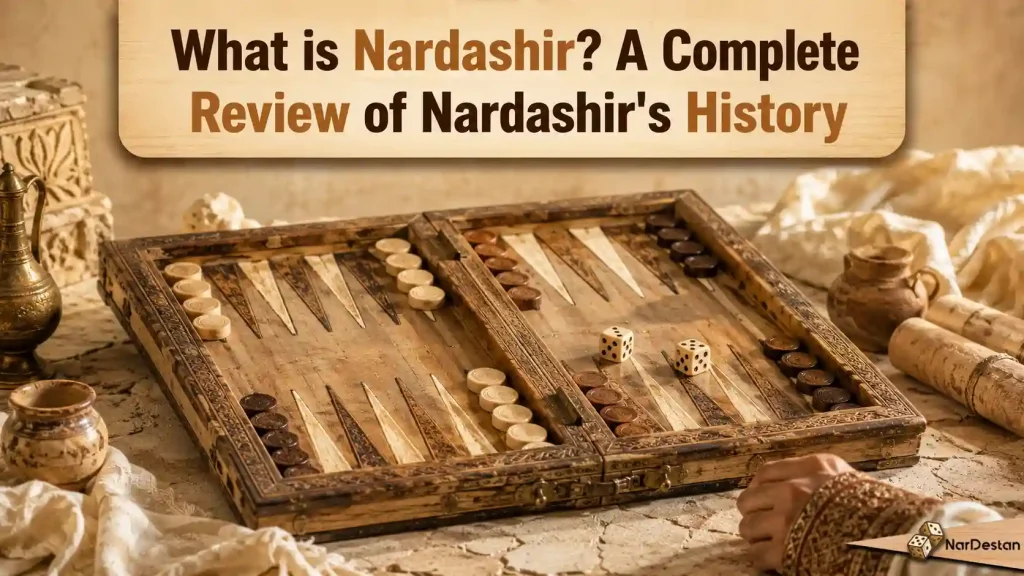
What is the nardashir game? Nardashir is the historical name of a board game rooted in ancient Persia, gaining prominence during the Sassanid era. Far beyond a simple pastime, it has long been regarded as a symbol of wisdom, tact, and the philosophy of life. If you are wondering about the nardashir meaning, it is deeply tied to Persian history and translates to “Ardashir’s game” or “Noble Ardashir.” It represents the magnificent harmony between intellect, order, and destiny in Persian culture. To learn more about these fascinating concepts, the historical origins, and discover exactly what is nardashir game, stay with Nardestan until the end of this article.
Quick Facts About Nardashir
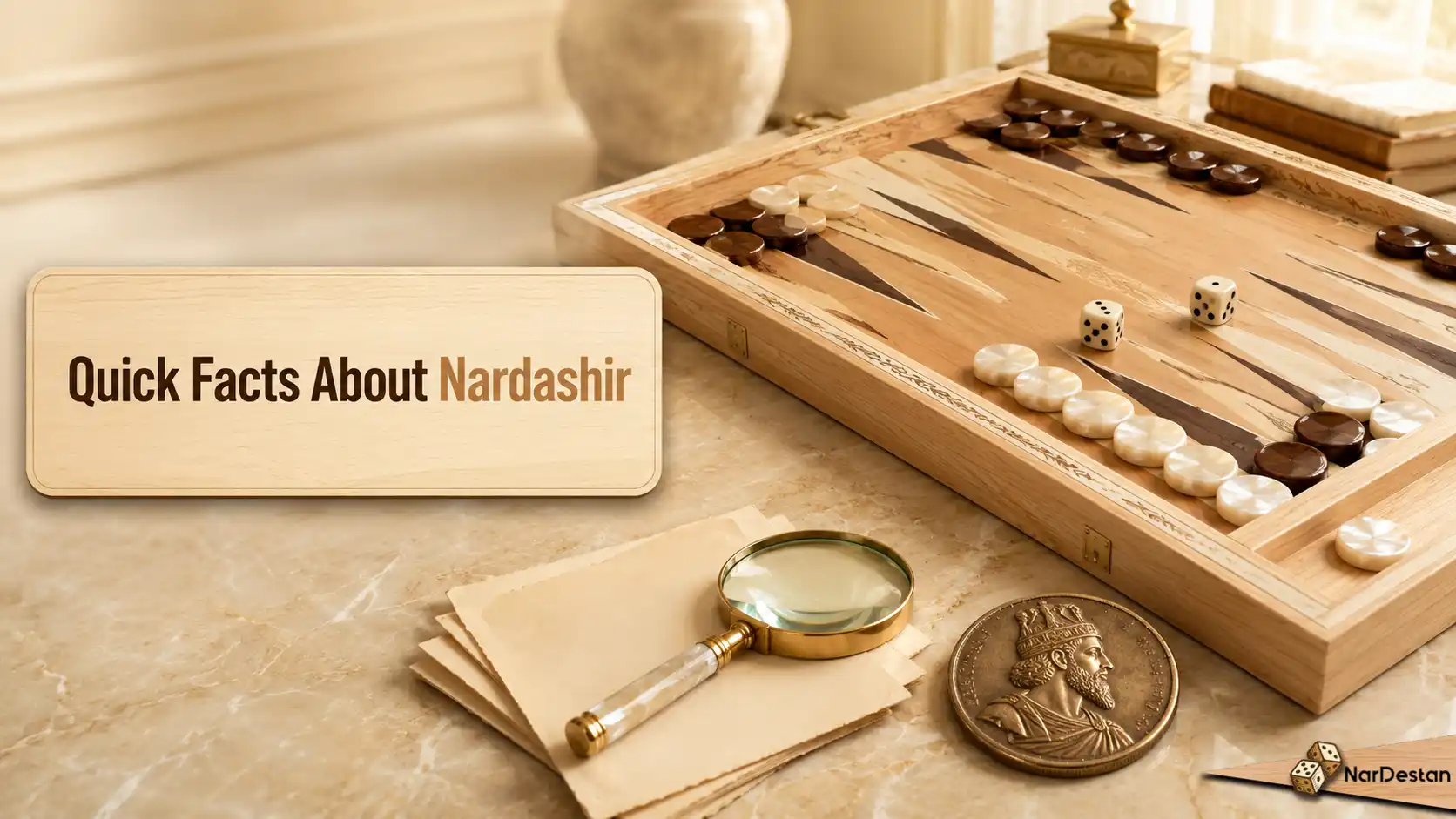
| Subject | Description |
| Historical Root | Ancient Persia, Sassanid Era |
| Key Figures | Ardashir Babakan, Khosrow Anushirvan, and Vizier Bozorgmehr |
| Game Type | Board game, strategic, a blend of luck and intellect |
| Concept & Philosophy | Symbol of wisdom, tact, and balance between intellect, order, and destiny |
| Modern Significance | Persian cultural heritage and the foundation of modern backgammon |
Often referred to in historical texts (and sometimes in early Arabic literature as al nardashir), this is the oldest form of backgammon in ancient Persia. Broadly speaking, with nardashir a game similar to backgammon, it is essentially the ancient ancestor of the modern version you play today. The main distinction is that in its ancient form, every single piece, dice roll, and move carried profound philosophical and symbolic messages. To familiarize yourself with the modern game and its rules, you can refer to our article on “What is Backgammon“.
What is the Root of the Name Nardashir?
If you are looking for the nardashir meaning in english, we must look at its linguistic roots. Historically, the word “Nard” is a contracted form of the Middle Persian word “Nēw-Ardaxšīr”, which translates to “Noble Ardashir” or “Brave Ardashir.” Consequently, the meaning of nardashir translates directly to a game named in honor of Ardashir I (Ardashir Babakan), the founder of the Sassanid Empire.
Contrary to some popular beliefs that link the word “Nard” to counting or calculation, linguists and historians confirm that “Nard” is simply the evolution and abbreviation of the word Nardashir over centuries. Thus, the nardashir game is not just a title; it is a historical tribute to wise kingship and ancient Persian philosophy.
Note: Getting acquainted with Nardashir can give you a much better understanding of modern strategies. To learn the basics, read our “backgammon beginners guide“ article, and for advanced techniques, refer to Professional Backgammon Training.
History of Nardashir in the Sassanid Era: Separating Fact from Legend
For a long time, the history of this game has been mixed with legends. To understand its true origins, we must look at two distinct historical timelines in the Sassanid era, separated by about 300 years:
1. The Era of Ardashir Babakan (Early Sassanid Period):
According to some historical narratives, the original foundation of the game was laid by Ardashir Babakan (the founder of the Sassanid dynasty). This is why the game was named “Nēw-Ardaxšīr” (Nardashir) in his honor, marking it as a royal invention.
2. The Era of Khosrow Anushirvan & Bozorgmehr (300 Years Later):
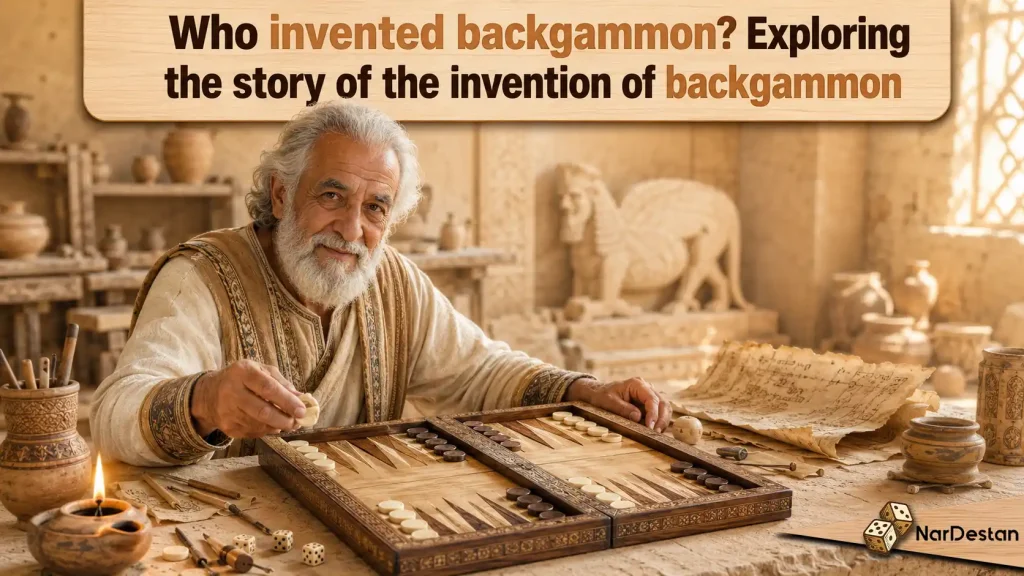
The most famous story of the game’s creation, detailed in the Middle Persian text Chatrang-namak and Ferdowsi’s epic Shahnameh, takes place during the reign of Khosrow I (Anushirvan). The King of India sent the game of Chess to Anushirvan’s court to test the wisdom of the Persians. The brilliant Persian vizier, Bozorgmehr (Wuzurgmihr), not only decoded the logic of Chess but also invented (or perfected) Nardashir in response.
Bozorgmehr wanted to show the King of India that life is not solely based on pure logic and absolute planning (as represented by Chess); rather, human life is a complex blend of wisdom, decision-making, and unpredictable fate. Thus, Nardashir became the ultimate symbol of the Persian worldview: acknowledging the role of destiny and chance while utilizing intellect and tact.
Philosophy and Symbolism in Nardashir
As mentioned earlier, this game goes far beyond simple entertainment. Through its precise design, it conveys educational messages and cosmic concepts. Every component of the board encourages the player to reflect on time and the acceptance of fate:
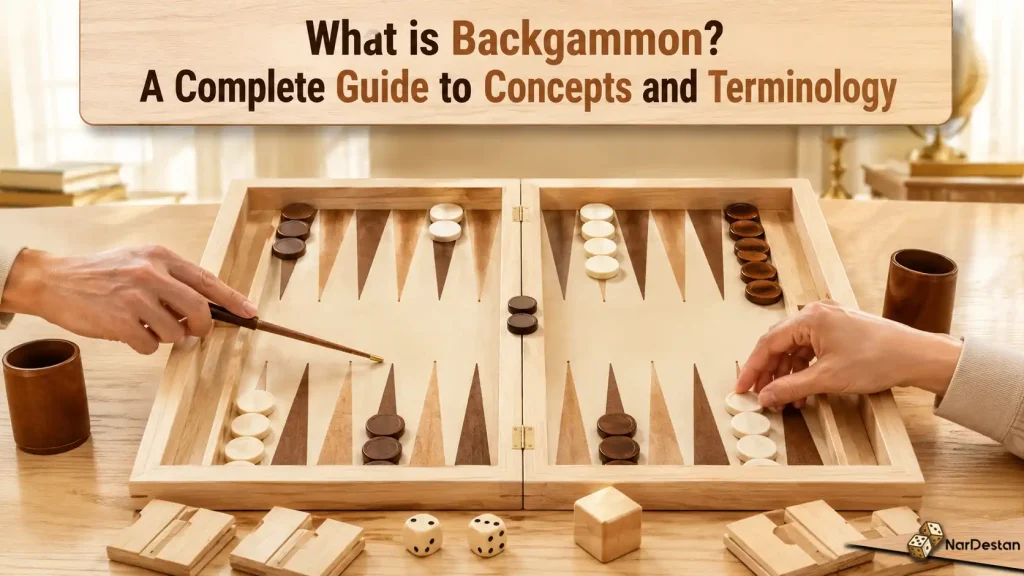
- The Board: Represents the Earth and the material world.
- 30 Pieces: Represent the 30 days of a Persian month (15 white for daytime and 15 black for nighttime).
- 24 Points (Triangles): Symbolize the 24 hours of a day and night.
- 12 Columns: Represent the 12 months of the year.
- The Dice (Tas): This is one of the most critical symbolic elements. The dice represent fate, destiny, and the movement of the stars. The numbers on opposite sides of a standard die always add up to 7 (1+6, 2+5, 3+4), which symbolizes the 7 planets or 7 heavens in ancient cosmology. While players use their intellect to move the pieces, the dice remind them that they are still subject to the greater forces of destiny.
What is the Difference Between Modern Backgammon and Nardashir?
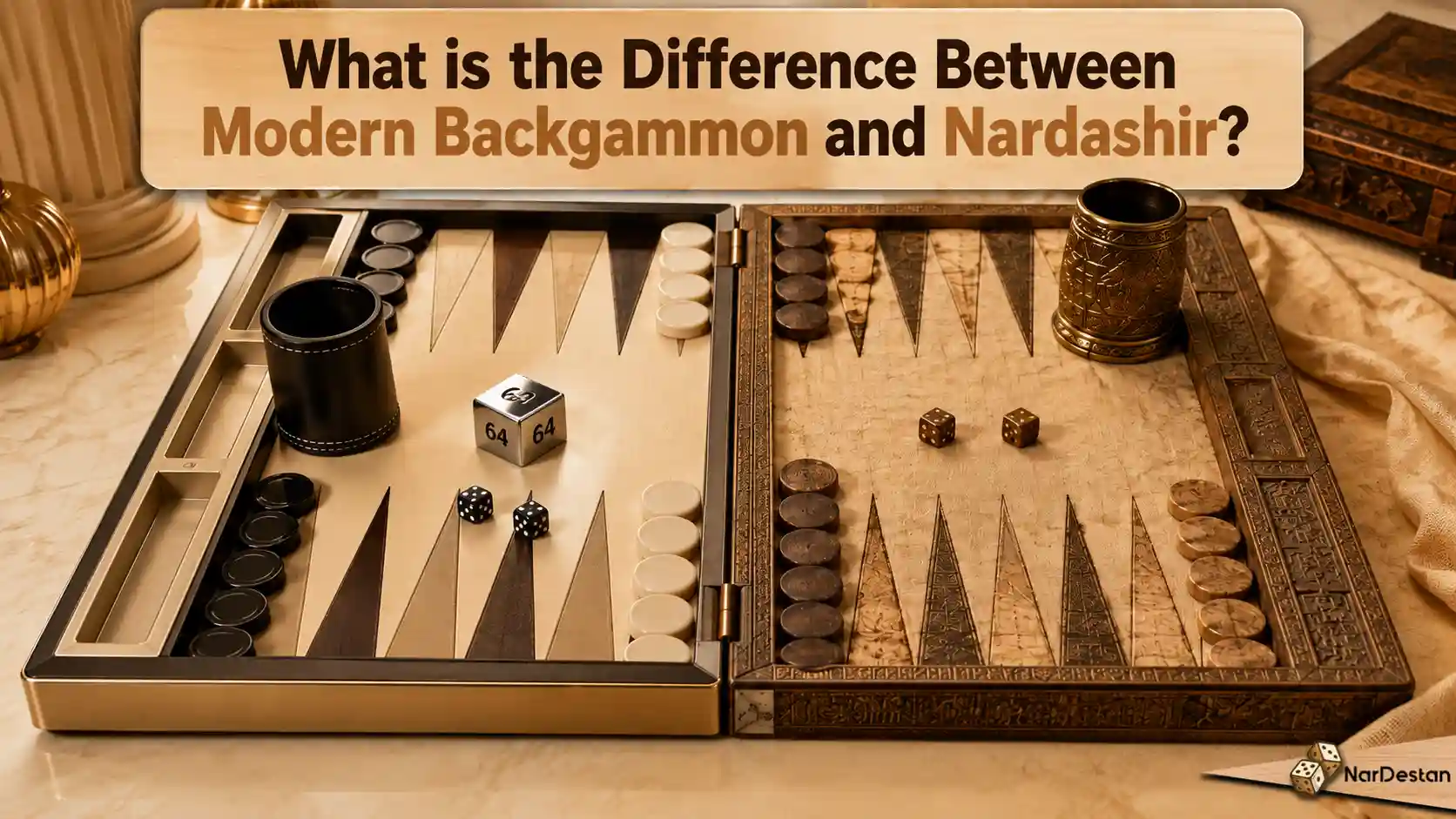
Although Nardashir is the direct ancestor of today’s backgammon, there are significant differences between the two. The table below outlines these distinctions:
| Feature | Nardashir | Modern Backgammon |
| Origin | Ancient Persia, Sassanid Era | Modern evolution, played globally |
| Objective | Moral/philosophical education & entertainment | Bearing off pieces, competition, and fun |
| Symbolism | Deeply philosophical (Dice = fate, Board = world) | Mostly competitive; philosophical symbols faded |
| Focus | The balance of cosmic destiny and human tact | Mathematical strategy, probability, and chance |
The Role of Nardashir in Persian Culture and Literature
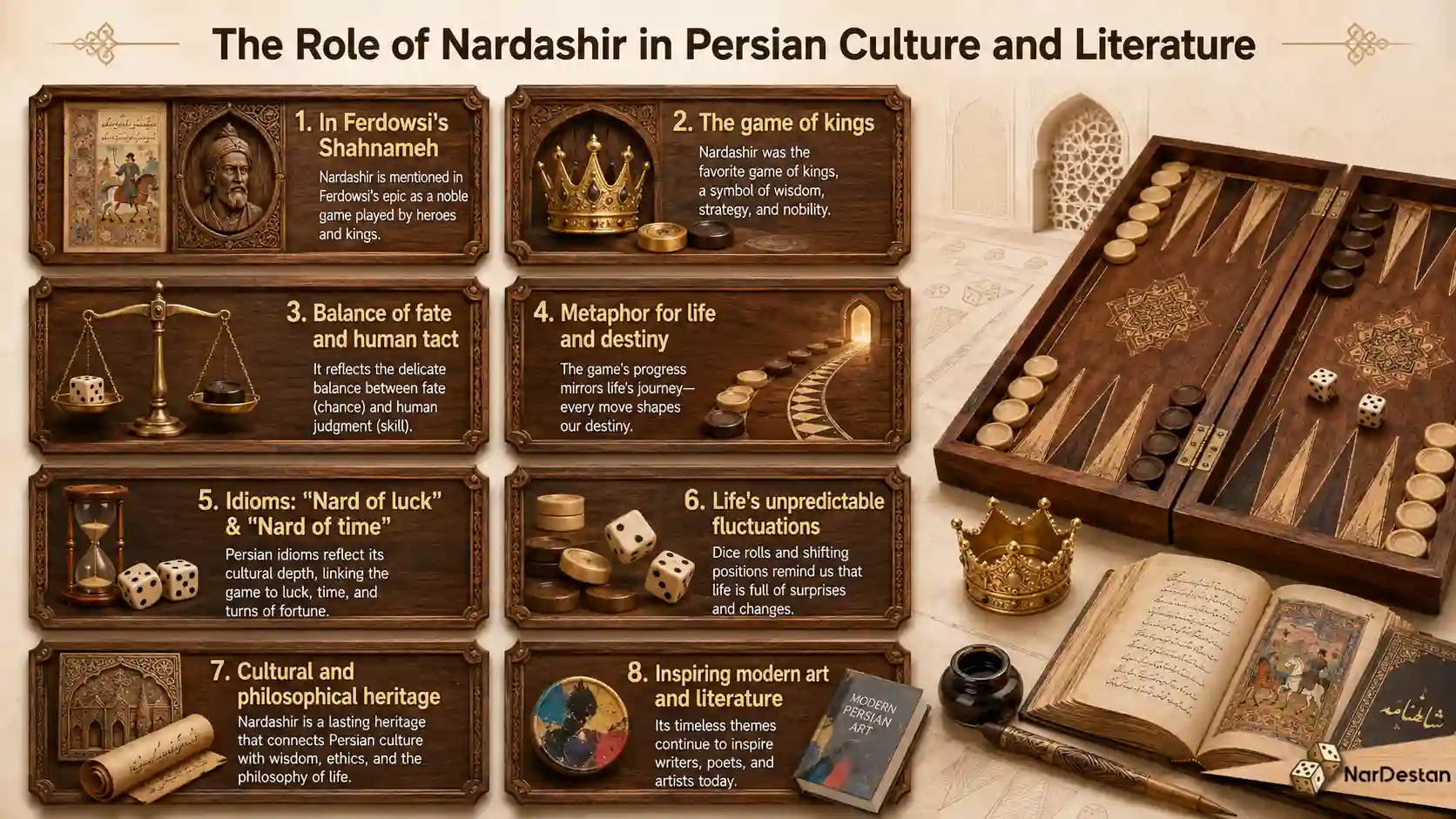
Nardashir played a massive role in Persian culture. In ancient texts and literary masterpieces, it is frequently mentioned as the game of kings and a symbol of the ultimate balance between fate and human agency. Persian poets and writers have used this game as a metaphor to express life’s unpredictable fluctuations. Idioms like the “nard of luck” or the “nard of time” are widely used in classical poetry, ensuring it remains a vibrant cultural heritage today.
The Spread and Influence of Nardashir Worldwide
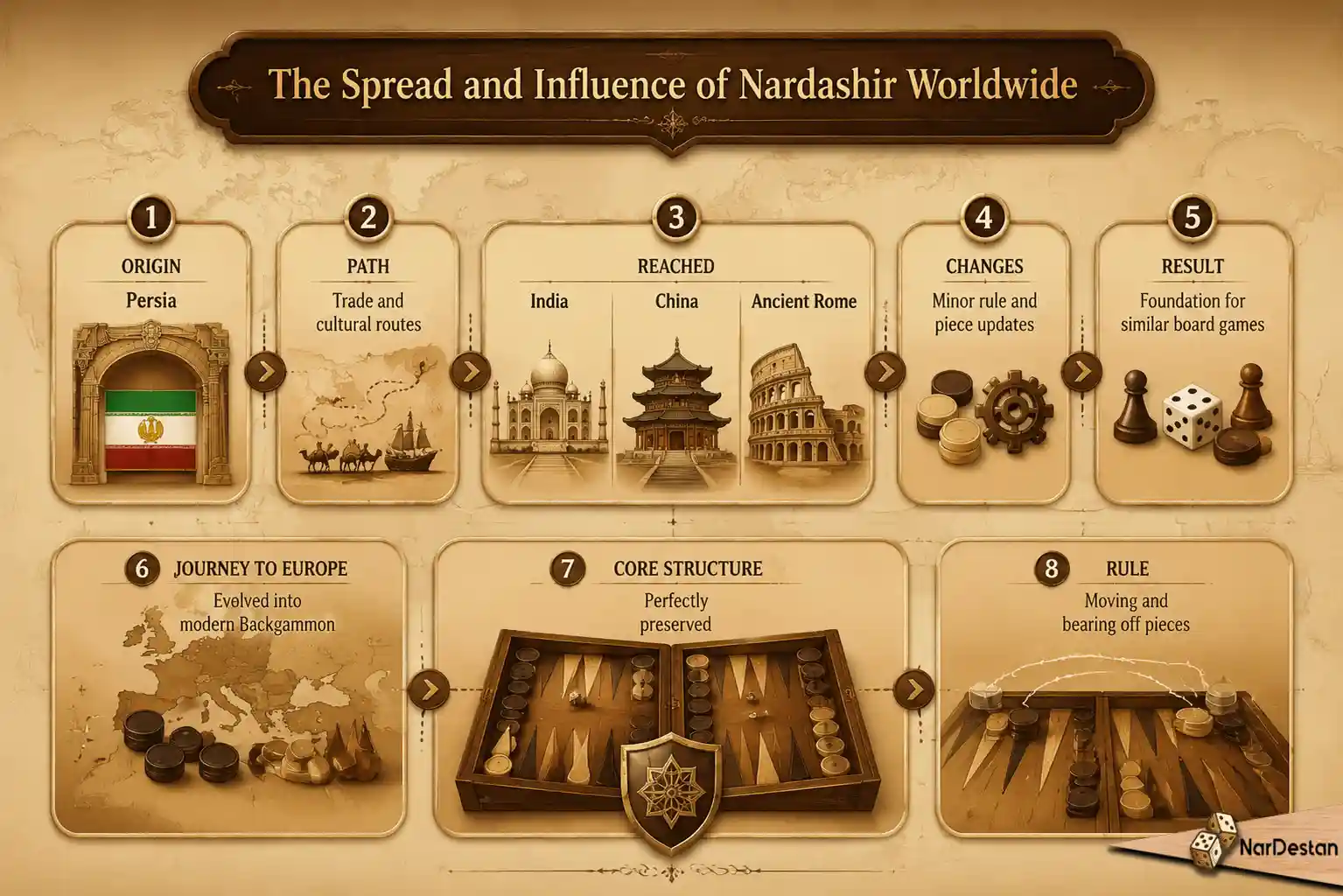
Nardashir did not remain confined to Persia. Over time, it crossed borders through trade and cultural routes, reaching India, China, and ancient Rome. With minor modifications to its rules, it became the foundation for similar board games worldwide. Eventually, it made its way to Europe, evolving into modern Backgammon. Despite these changes, the core structure of the game has been perfectly preserved.
Frequently Asked Questions (FAQ)
What is Nardashir?
It is the ancient Persian ancestor of modern backgammon, with its profound roots tracing back to the Sassanid era.
What is the difference between Nardashir and modern backgammon?
Nardashir had a highly philosophical nature focusing on the harmony between human tact and cosmic destiny, whereas modern backgammon focuses strictly on competition and strategy.
What do the dice symbolize in Nardashir?
The dice represent fate, luck, and the movement of the heavens. The opposite sides of the dice always add up to 7, symbolizing the 7 ancient planets.
How can one play modern backgammon?
By studying beginner and professional backgammon tutorials on Nardestan and practicing on a standard board.